

Is Coconut Milk Gluten Free? An Essential Guide
Good news for gluten-free food lovers: pure, unadulterated coconut milk is 100% naturally gluten-free.
At its core, coconut milk is incredibly simple. It's just the flesh of a mature coconut blended with water. Since coconuts are a fruit, not a grain like wheat, barley, or rye, they don't contain any gluten whatsoever. This makes it a fantastic, creamy base for anyone on a gluten-free diet.
Your Guide to Safe Coconut Milk
While coconut milk starts off gluten-free, things can get a little more complicated on its journey to the supermarket shelf. The real issue isn't the coconut itself, but what manufacturers might add along the way to improve texture, boost flavour, or extend its shelf life. This is where hidden gluten can sneak in.
Because of these additives, you can't just assume every carton is safe, especially if you have coeliac disease. Thankfully, the standards for gluten-free labelling in Australia are quite strict. Food Standards Australia New Zealand (FSANZ) mandates that any product labelled "gluten-free" must have no detectable gluten. This gives us a strong safety net, and you can learn more about the robust Australian gluten-free market and its regulations to feel even more confident.
To make things easier when you're shopping, just remember this:
- Pure and Simple: Tinned or cartoned coconut milk listing only "coconut" and "water" is almost always a safe choice.
- Added Complexity: Flavoured varieties, "light" versions, or "barista blends" need a closer look at the fine print for any sneaky gluten-containing ingredients.
This guide will walk you through exactly how to spot the difference and choose with confidence.
Why Coconut Milk Starts Out Naturally Gluten-Free
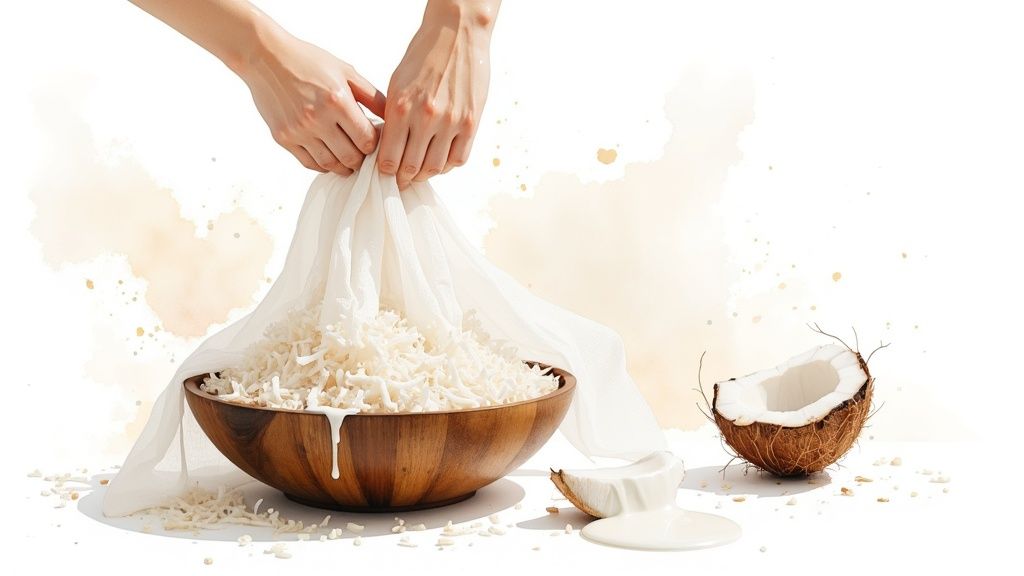
When you get right down to it, pure coconut milk is incredibly simple. Think about squeezing juice from an orange – what you get is pure orange. The process for making coconut milk is just as straightforward.
It all starts with the white flesh of a mature coconut. This flesh is grated, soaked in a bit of hot water, and then squeezed to draw out that rich, creamy liquid. That’s really all there is to it.
You’ll notice that no grains like wheat, barley, or rye ever enter the picture. Coconuts are fruits from a palm tree, a world away from the cereal grains that contain gluten. This is the key reason why pure, unadulterated coconut milk is always naturally gluten-free.
The Australian Context
Here in Australia, this is fantastic news. With Coeliac Australia reporting that around 1 in 70 Aussies live with coeliac disease, the need for trustworthy gluten-free foods is more important than ever.
This has created a huge demand for safe ingredients, fuelling a gluten-free market expected to hit USD 160.23 million by 2025. Naturally gluten-free staples like coconut milk are a massive part of this, as you can see in reports on the Australian gluten-free food industry.
Pure coconut milk provides a reliable, creamy base for countless dishes, making it an invaluable pantry staple for anyone navigating a gluten-free diet. Its natural composition means you can confidently use it in everything from curries to smoothies.
It's a brilliant ingredient for crafting delicious meals without the worry. If you're looking for some inspiration, we have a fantastic collection of gluten-free Indian recipes that make great use of it. Understanding this clean starting point is crucial before we dive into how additives and manufacturing can sometimes complicate things.
How to Spot Hidden Gluten in Coconut Milk
Pure, unadulterated coconut milk is naturally gluten-free. But what you find in a can or carton on the supermarket shelf often has a few extra ingredients added to improve its texture, stop it from separating, and boost its flavour. This is where things can get tricky.
Think of it this way: a simple garden salad is gluten-free, but the moment you add a creamy, bottled dressing, you have to start checking the label for wheat-based thickeners. It’s the same story with coconut milk – the additives are what need a closer look.
Learning to read an ingredients list like a detective is your best line of defence.
Common Additives to Watch For
The ingredients list is your map. While seeing these terms doesn't automatically mean gluten is present, they should definitely make you pause and dig a little deeper.
Here are the main things to keep an eye on:
-
Modified Food Starch: This one is a big red flag. It can be made from safe sources like corn or tapioca, but it can also be derived from wheat. Unless the source is clearly specified or the product has a gluten-free certification, it's safer to assume it might not be suitable.
-
Maltodextrin: Much like modified food starch, maltodextrin is usually gluten-free because it's made from corn, rice, or potato. On rare occasions, it can come from wheat. Thankfully, Australian food labelling laws require wheat to be declared if it’s the source, but it still pays to be vigilant.
-
Natural Flavours: This is a notoriously vague term that can conceal all sorts of things, including barley-based derivatives. While Australian regulations require major allergens like wheat to be disclosed, "natural flavours" is a term that should always prompt a quick double-check of the packaging for a gluten-free claim.
A good rule of thumb? The shorter and more understandable the ingredients list, the better. If you see a bunch of chemical-sounding names you don't recognise, it’s a good sign to either hunt for that gluten-free logo on the label or simply grab another brand.
How to Read Labels and Choose a Safe Product
Alright, now that you know what to watch out for, let’s head to the supermarket aisle. Choosing a safe, gluten-free coconut milk isn't about guesswork; it's about becoming a savvy label reader. Think of it as a quick, three-step check.
Put on your detective hat for a moment. Your first mission is to scan the ingredients list for simplicity. If a product contains just "coconut extract" and "water," you've likely found a winner. It's the brands with a laundry list of ingredients that need a closer look.
The more complex that list is, the higher the chance of gluten sneaking in. This visual guide is a great way to simplify the process, helping you sort products into 'safe' and 'needs a closer look' piles.
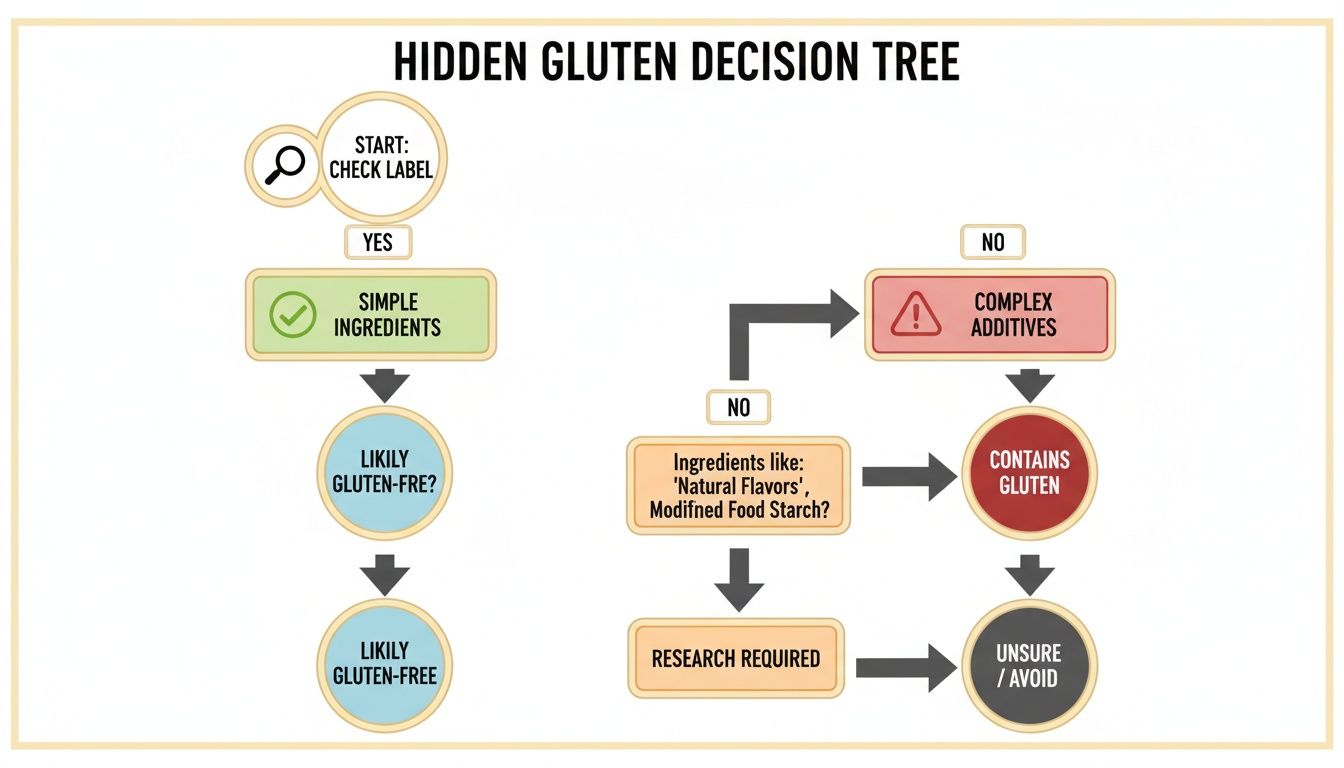
This little decision tree gives you a clear path: start with the label, and if you spot those complex additives, your investigation becomes much more important. It's a handy mental shortcut to use while you're shopping.
Mastering the Ingredient Label
Your best tool is right there on the can: the ingredient list. Luckily, Australia's food standards are on our side. They legally require manufacturers to declare major allergens, including wheat, in bold. This makes our job a lot easier.
Here's a practical checklist to run through:
- Scan for Simplicity: Go for short ingredient lists. Fewer items almost always mean lower risk.
- Check for Bold Allergens: Your eyes should immediately look for "wheat" in the ingredients or in the "contains" statement. If it's there, put it back on the shelf.
- Look for Certified Logos: The ultimate gold standard is a certified gluten-free logo. This little symbol is your guarantee that the product has been independently tested and meets Australia's strict "no detectable gluten" standard.
With plant-based milks now found in 40% of Australian households, clear labelling has never been more crucial. And with around 1 in 70 Aussies living with coeliac disease, the demand for properly certified products is massive.
Prioritising products with a certified gluten-free logo is the safest move you can make. That certification removes any doubt about cross-contact or hidden gluten in vague ingredients like "natural flavours."
Making these simple checks a habit means the coconut milk you bring home is always safe to enjoy. The same logic applies when you're looking at prepared meals, too. You can see how this careful selection works in practice by exploring some of the best gluten-free meal delivery options in Australia, where all the label-reading has been done for you.
Understanding Cross-Contamination Risks
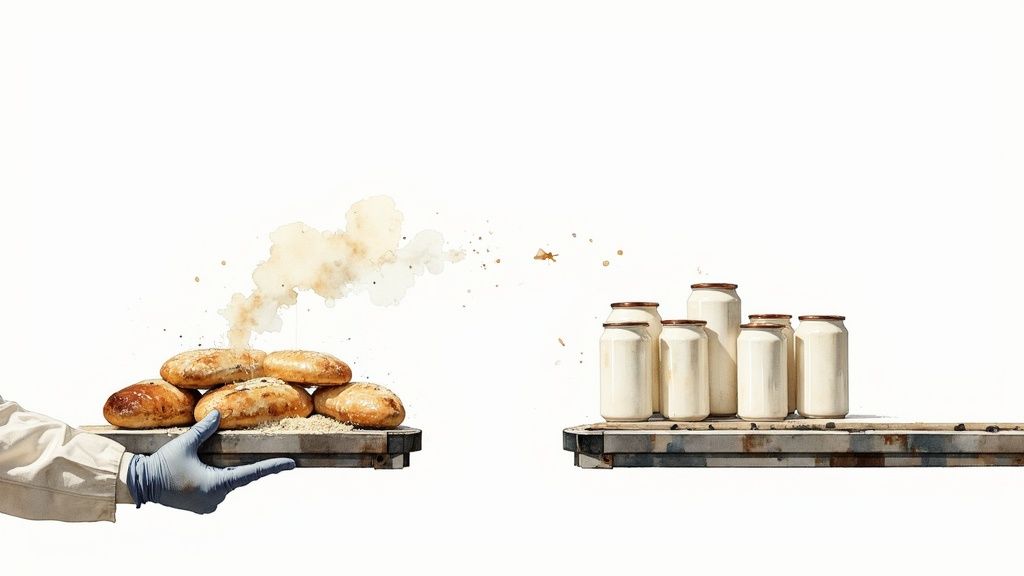
Even when you’ve checked the label and see no gluten-containing ingredients, there’s still an invisible threat for anyone with coeliac disease: cross-contamination. This is the sneaky transfer of tiny gluten particles from one food to another.
Picture a busy food production facility. One line might be used for wheat-based soups in the morning and then switched over to canned coconut milk in the afternoon. If that shared equipment isn't cleaned meticulously between batches, trace amounts of gluten can easily end up where they don't belong.
It’s the same reason you wouldn’t use the same knife to cut a wheat bread sandwich and then slice a gluten-free cake. Those cautionary statements you see, like "may contain traces of wheat," are the manufacturer's way of telling you the product was made in a facility or on equipment that also handles gluten.
The Safest Approach
So, how can you be absolutely sure? The most reliable way to avoid this risk entirely is to look for products that are certified gluten-free. This certification isn't just a marketing gimmick; it’s a promise.
For anyone with coeliac disease, a certified gluten-free logo is more than just a label—it's your assurance that the product has passed strict testing to ensure it's safe from cross-contamination.
This gives you the confidence that the manufacturer has rigorous safety protocols in place. While we're talking about gluten here, these principles are vital for all food safety. You can find more general advice on how to prevent cross-contamination in various settings to keep your food safe.
Your Common Coconut Milk Questions Answered
Let’s tackle some of the most common questions that pop up when you're trying to figure out which coconut milk is safe to buy. Think of this as a quick guide to clear up any lingering doubts, so you can make confident, healthy choices every time.
Are Canned, Carton, And Powdered Milks The Same?
Not quite, and the difference matters. Canned coconut milk is often the most straightforward, usually containing just coconut and water. This makes it a great low-risk starting point.
On the other hand, cartoned, beverage-style milks and powdered versions often have a longer ingredient list. You’ll find things like thickeners and stabilisers added to improve texture and shelf life, which increases the risk of hidden gluten. With these, you really need to scrutinise the labels.
If A Label Says Wheat-Free Is It Gluten-Free?
Absolutely not, and this is a critical point to understand. 'Wheat-free' simply means there's no wheat in the product. But gluten is also found in barley and rye. A product can easily be wheat-free but still contain gluten from one of these other grains.
For anyone with coeliac disease, only a product that's explicitly labelled 'gluten-free' is considered safe.
Remember: Wheat-free does not equal gluten-free. Always look for that specific 'gluten-free' claim or certification. It's the only way to be certain the product is safe from all sources of gluten.
What About Coconut Cream And Coconut Oil?
The same rules apply here. Pure coconut cream—which is really just a thicker, richer version of coconut milk with less water—is naturally gluten-free. Pure coconut oil is also gluten-free.
For both, the potential risk comes from any additives or flavourings, or from cross-contact during processing. As always, check the label. Building this kind of knowledge is a key part of successful gluten-free meal planning and makes keeping your diet safe and delicious so much easier.
At Jewel of Asia, we take the guesswork out of gluten-free eating. Explore our delicious, chef-prepared Indian meals, with clear allergen information so you can enjoy authentic flavours with complete confidence. Check out our menu at https://www.jewelofasia.com.au.
Share