


Easy Gluten Free Meal Planning for Australians
Ditching gluten doesn't mean your meals have to be complicated or boring. Honestly, the secret to successful gluten free meal planning is pretty simple: structure your week around naturally gluten-free whole foods and a few clever strategies. It's all about being proactive, which saves you time, cuts down on stress, and puts you firmly in control of your health.
Why Gluten Free Meal Planning is a Game Changer
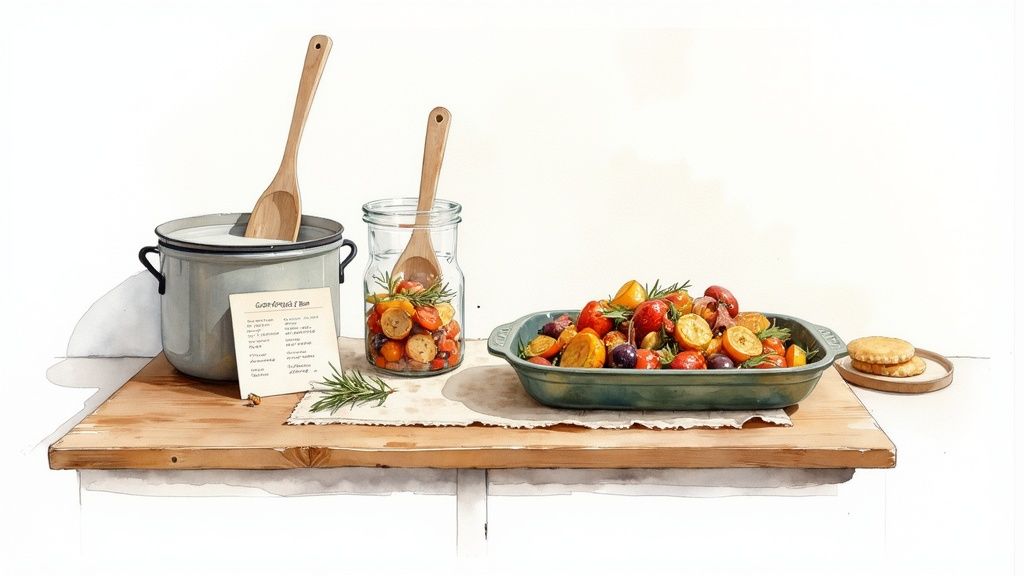
Starting a gluten-free lifestyle can feel like you’ve been dropped in a new country without a map. All of a sudden, your go-to meals and quick snacks are off the table, and the weekly grocery shop turns into a major mission. This is exactly where planning becomes your best mate, turning what feels like a restriction into an opportunity for seriously delicious, organised eating.
For a lot of Aussies, this isn't just a choice—it's a medical necessity. And with an estimated 80% of Australians with coeliac disease still undiagnosed, there's a huge community out there needing to be super careful to stay healthy. This is why getting your prep right is so important.
The Core Benefits of a Solid Plan
Getting into a good rhythm with your meal planning brings real, practical benefits that go way beyond just figuring out what to eat. It's about making your life easier and making the healthy choice the default one.
Here’s what you stand to gain:
- Less Brain Drain: No more staring blankly into the fridge at 6 PM, wondering what on earth you can make. Your plan has already made the decision for you.
- Serious Savings: A proper shopping list stops you from making impulse buys and helps you use up everything you buy, which means less food (and money) in the bin.
- Better Health: Planning encourages you to build balanced meals around nutrient-packed whole foods—think lean proteins, heaps of veggies, and fruit—instead of just reaching for processed gluten-free snacks.
- More 'You' Time: When you think ahead, you spend less time cooking every single day. That frees up your evenings for family, hobbies, or just putting your feet up.
Embrace the 'Cook Once, Eat Twice' Philosophy
One of the most effective tricks in the gluten-free playbook is the 'Cook Once, Eat Twice' method. And no, this doesn't mean eating sad, identical leftovers for days. It’s about being smart with your cooking.
For example, roast a big chicken on Sunday. The leftovers can be shredded for tacos on Monday and tossed into a salad for Tuesday's lunch. Cook up a big batch of quinoa to have as a side dish one night, then use it as the base for a Buddha bowl the next. It’s a simple shift in thinking that slashes your cooking time without killing variety.
And for those weeks when things are just too hectic, knowing the best gluten free meal delivery in Australia can be an absolute lifesaver, giving you convenient, safe options that slot right into your plan.
This philosophy is your secret weapon against weeknight chaos. By making your core ingredients work double-duty, you build efficiency directly into your routine, making your gluten-free journey sustainable and enjoyable.
Your Weekly Gluten-Free Meal Blueprint
Alright, let's get down to business and turn all this talk into action. A brilliant gluten-free meal plan needs a solid structure, but it also has to bend without breaking when life gets chaotic. This is where a great template comes in – it’s not a strict set of rules, but a framework you can build your week on. It takes the guesswork out of the equation.
To help you get started, I’ve put together two different weekly planners that are perfect for common Aussie lifestyles. Think of them less as rigid rulebooks and more as your customisable roadmaps to a week of delicious, stress-free eating.
The 7-Day Family Meal Plan Template
This template is built for the beautiful chaos of a busy household. It's designed knowing you’re likely juggling different schedules, picky eaters, and varying appetites. The secret weapon here? Versatility and smart leftovers.
Instead of trying to come up with seven completely different dinners from scratch, this approach is all about mixing and matching.
- Theme Nights: Get everyone on board by assigning themes like "Taco Tuesday" (using corn tortillas, of course) or "Stir-fry Friday" with tamari instead of soy sauce. It instantly simplifies decisions.
- Component Cooking: Rather than planning a full meal, you plan key components. For example, Monday’s slow-cooked pulled pork easily becomes the star filling for Wednesday’s stuffed sweet potatoes.
- Leftovers for Lunch: This is my non-negotiable tip for saving time, money, and sanity. The template has dedicated spots to plan how last night’s dinner will become today’s easy lunch.
A great family plan doesn't just list meals; it creates a flow. It anticipates the busy weeknights and uses the quieter weekends for a bit more prep, ensuring you're never caught scrambling.
And don't forget to schedule in a bit of fun! When you're mapping out your week, pencil in a treat like this gluten and dairy-free cookie dough recipe for a weekend bake-off.
The Budget-Friendly Student Plan Template
Being a student doesn't mean you're doomed to a diet of rice and beans (though they are fantastic gluten-free staples!). This plan is all about getting maximum flavour and nutrition from a minimal budget, focusing on affordable proteins, seasonal veggies, and batch cooking.
Here’s how this template makes your life easier:
- Anchor Meals: Pick two or three main, affordable recipes to cook in a big batch on a Sunday. Think a huge pot of lentil bolognese, a hearty chicken and veggie soup, or a versatile quinoa salad.
- Ingredient Overlap: The shopping list is designed around ingredients you can use in multiple dishes. That big bag of carrots can be roasted for a side, grated into salads, and blitzed into a soup.
- Smart Snacking: The plan includes ideas for cheap, filling snacks like hard-boiled eggs, apples with peanut butter, or homemade popcorn. It's the best way to avoid those expensive impulse buys from the uni cafe.
For example, a kilo of chicken mince can make meatballs for gluten-free pasta one night and patties for burgers the next. This strategic overlap is the key to eating well without draining your bank account.
To give you a clearer picture, here’s a high-level look at how you could structure a week. This isn't a strict menu, but a guide to show how you can balance different meal types for variety and nutrition.
Sample 7-Day Gluten Free Meal Plan Overview
| Day | Breakfast | Lunch | Dinner |
|---|---|---|---|
| Monday | Smoothie | Leftover Curry | Roast Chicken & Veggies |
| Tuesday | GF Toast & Avocado | Chicken Salad | Taco Tuesday (Corn Tortillas) |
| Wednesday | Yoghurt & Berries | Leftover Tacos | Quinoa & Roasted Veg Bowl |
| Thursday | Scrambled Eggs | Quinoa Salad | Lentil Bolognese (GF Pasta) |
| Friday | GF Oats | Leftover Bolognese | Stir-fry with Tofu & Rice |
| Saturday | Pancakes (GF Flour) | Sandwiches (GF Bread) | Homemade GF Pizza |
| Sunday | Leftover Pancakes | Big Salad with Leftovers | Sunday Roast or BBQ |
This table illustrates a flow where leftovers are strategically used, and weekends allow for slightly more involved meals.
How to Use These Templates Effectively
No matter which template you lean towards, the process is the same. I always recommend filling in your dinners first, since they usually take the most effort. From there, work backwards to plan your lunches—often, these will just be dinner leftovers. Breakfasts can be a simple rotation of your favourites, like smoothies, eggs, or gluten-free oats.
Before you start, take a quick look at your calendar for the week ahead. If you’ve got a late meeting on Wednesday, make that a designated leftover night or schedule in an easy ready-made meal. The most important part of making meal planning stick is being realistic. Your plan should serve you, not the other way around.
Building Your Gluten-Free Pantry and Shopping List
Any successful gluten-free meal plan doesn't start in the kitchen—it starts with a well-stocked pantry. Think of it as your secret weapon. A pantry filled with reliable staples turns your weekly plan from a good idea into something you can actually stick to, making those trips to Coles or Woolies quicker and far more focused.
This shift in how we shop is becoming the new normal. With nearly 1 in 5 Australians now actively cutting back on or avoiding gluten entirely, the demand for accessible, varied options has shot through the roof. This has led to a welcome explosion in product availability, especially for things like bakery goods, which make up a huge chunk of the market.
The Foundation of Your Gluten-Free Pantry
Your pantry is your gluten-free command centre. When it’s stocked with the right ingredients, you can throw together a nutritious meal even when you're completely out of time or energy. It's also a fantastic way to save a bit of cash by buying in bulk and dodging those last-minute, expensive purchases.
The key is to focus on foundational items that are versatile and pack a nutritional punch.
- Naturally GF Grains: Quinoa, brown rice, basmati rice, polenta, and buckwheat are all brilliant bases for countless meals.
- Legumes and Pulses: Canned or dried lentils, chickpeas, and black beans are budget-friendly powerhouses of protein and fibre.
- Nuts and Seeds: Almonds, walnuts, chia seeds, and flaxseeds are perfect for jazzing up breakfasts, salads, or just for healthy snacking.
If you need a bit more inspiration, checking out a list of the top gluten-free food staples can give you some great ideas for what’s essential.
Building a solid pantry is an investment in your future self. Every time you open the cupboard and find what you need, you’re saving time, stress, and the temptation to order an expensive (and potentially unsafe) takeaway.
Creating Your Master Shopping List
Once your pantry is sorted, your weekly shopping list suddenly becomes much shorter and more manageable. I always recommend organising your list by supermarket aisle—it stops you from backtracking and cuts down on those sneaky impulse buys. This simple trick turns a potentially stressful chore into a quick, efficient task.
Here’s what a typical list might look like, broken down by section:
Produce Section
- Leafy greens (spinach, rocket)
- Cruciferous veggies (broccoli, cauliflower)
- Root vegetables (sweet potatoes, carrots)
- Onions and garlic
- Seasonal fruit (berries, bananas, apples)
Protein (Butcher & Chilled Section)
- Lean meats (chicken breast, mince)
- Fish (salmon, tuna)
- Eggs
- Tofu or tempeh
- Greek yoghurt (plain)
Aisles (Canned Goods & Pantry Top-Ups)
- Canned tomatoes
- Coconut milk
- Tamari (GF soy sauce alternative)
- Gluten-free pasta
- Rolled oats (certified GF)
- Herbs and spices you're running low on
Mastering Label Reading in Australia
Getting comfortable reading labels is a non-negotiable skill when you're eating gluten-free. Luckily, Australia's food labelling laws are quite strict, which is a massive help. Always look for the "Coeliac Australia Endorsed" logo for the highest level of assurance that a product is safe.
If a product isn’t certified, your next step is to scan the ingredients list for obvious gluten sources like wheat, barley, rye, and malt. After that, check the allergen statement. It will clearly state "Contains: Gluten" if it's present. Be wary of "may contain" warnings if you are highly sensitive, as this indicates a risk of cross-contamination during manufacturing.
Sticking to a budget is a huge part of making any meal plan sustainable. For more tips on making healthy choices without breaking the bank, have a look at our guide on https://www.jewelofasia.com.au/blogs/news/how-to-eat-healthy-on-a-budget. Combining smart pantry stocking with savvy shopping is truly the key to long-term success.
Effortless Gluten-Free Meal Prep and Batch Cooking
The real magic of a stress-free, gluten-free week often happens on a Sunday afternoon. This is where a little bit of effort pays off big time, turning those chaotic weeknights into calm, delicious dinners. This is the power of meal prep and batch cooking – your secret weapon for staying on track.
Don't worry, this isn't about being chained to the stove all weekend. It’s about being clever and preparing core ingredients that you can mix and match later on. Think of it as creating a 'building block' system for your future self.
Prepare Your Core Components
The smartest way I've found to prep is by category. By cooking your grains, proteins, and veggies in big batches, you’re basically creating a versatile toolkit for the week ahead.
- Batch Cook Grains: Get a big pot of quinoa, brown rice, or buckwheat on the go. Once it's cooked and cooled, pop it in a container in the fridge. Suddenly you’ve got an instant base for a quick salad, a side for a curry, or the start of a nourishing grain bowl.
- Roast Your Veggies: Grab a large baking tray and fill it with chopped seasonal vegetables like sweet potato, broccoli, capsicum, and onion. A good drizzle of olive oil, some salt and pepper, and roast until tender. These are perfect for tossing into salads, omelettes, or just having on the side.
- Prep Your Proteins: Cook up a batch of chicken breasts you can shred for tacos or slice for salads later. Hard-boil half a dozen eggs for a grab-and-go snack or easy breakfast. If you’re plant-based, press a block of tofu so it's ready to be pan-fried or baked in minutes.
I've found that dedicating just one or two hours to this process effectively 'pre-cooks' most of my meals for the week. It’s genuinely the single most impactful habit for making a gluten-free lifestyle feel easy.
Master Your 'Flavour Bombs'
Let’s be honest, plain chicken and steamed broccoli can get boring, fast. The key to keeping things interesting is having pre-made "flavour bombs" ready to go. These are your dressings, sauces, and dips that can instantly take a simple dish from bland to brilliant.
A simple vinaigrette with olive oil, apple cider vinegar, and Dijon mustard takes seconds to shake up in a jar and lasts all week in the fridge. A homemade pesto or a tub of hummus can turn a basic snack into something truly satisfying. For more inspiration on packing flavour into your food, check out our guide on delicious gluten-free Indian recipes that are full of incredible, aromatic spices.
Integrating Ready-Made Meals Strategically
We have to be realistic—some weeks, even the best-laid plans fall apart. Life gets in the way, and finding the time to batch cook just doesn't happen. This is where having a reliable backup plan is an absolute game-changer. Instead of caving and ordering a potentially unsafe takeaway, you can seamlessly slot in high-quality, pre-made gluten-free meals.
This strategy is getting easier all the time. The Australian gluten-free food market has exploded and is now valued at around USD 361.20 million, with ready-to-eat meals being a huge part of that. This growth means there are more safe, genuinely delicious choices available than ever before. If you're interested in the trend, you can read the full industry analysis on imarcgroup.com.
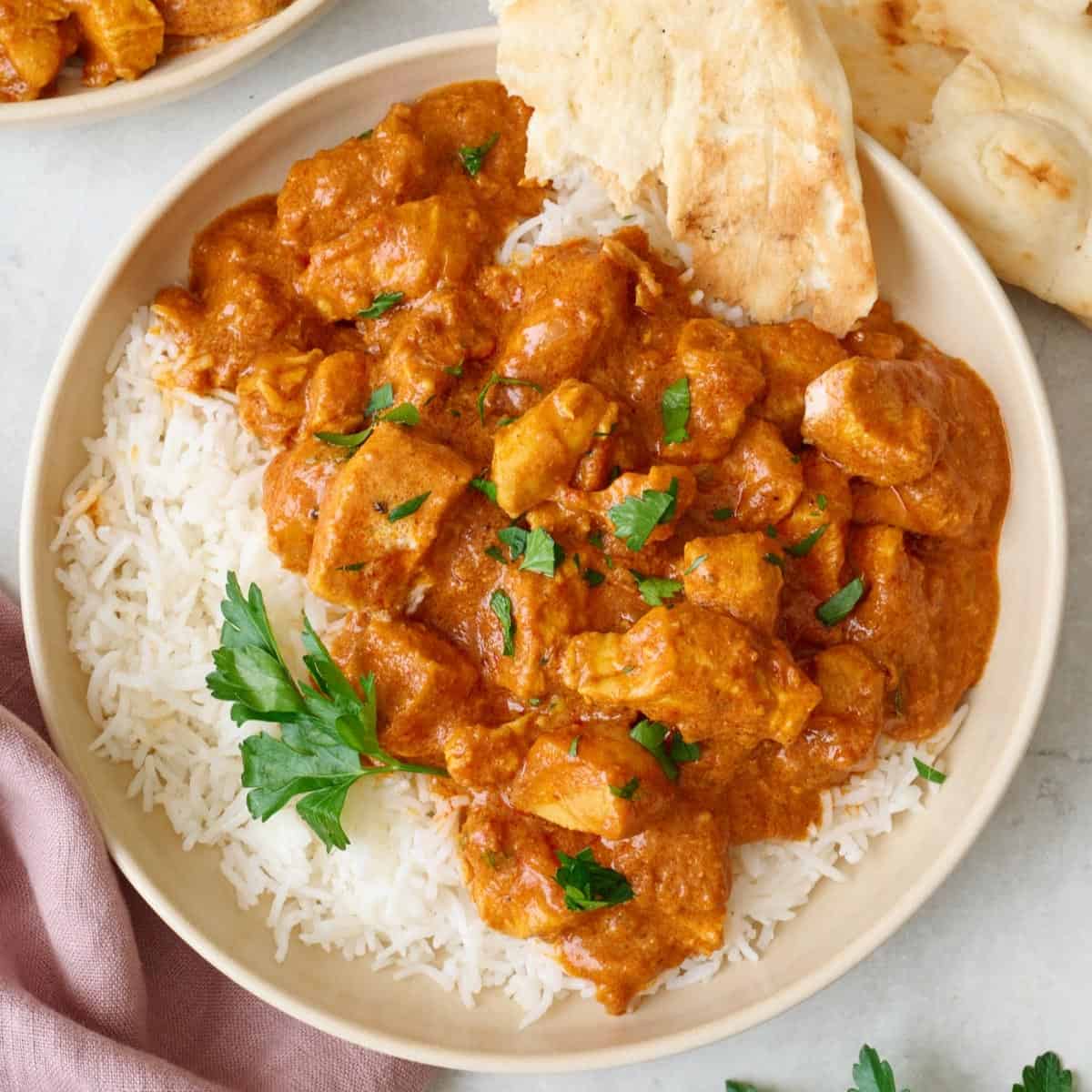
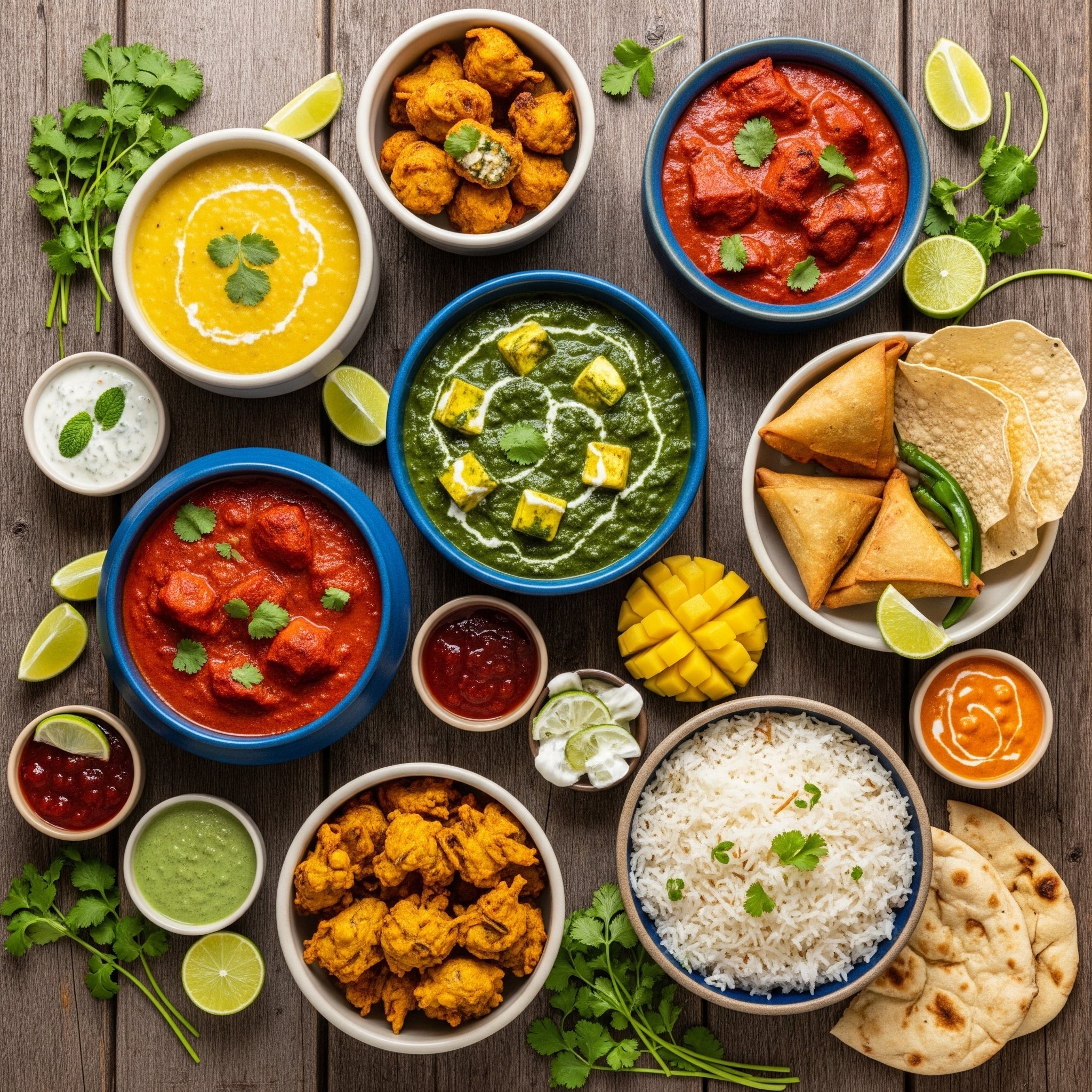
So, what does this look like in practice? You might plan to cook from Monday to Wednesday but schedule a Jewel of Asia ready-made meal like a comforting Butter Chicken or Palak Paneer for Thursday. It gives you a guaranteed delicious, certified gluten-free meal without any of the work, helping you get over that mid-week hump.
This isn’t about 'failing' your meal plan; it's about building a smarter, more flexible one that works for your real life. By combining your own batch cooking with trusted ready-made options, you create a sustainable system that keeps you well-fed, healthy, and sane, no matter how hectic the week gets.
Common Mistakes and Smart Ingredient Swaps
When you first start planning gluten-free meals, it's easy to get a few things wrong. Don't worry, we've all been there. One of the most common traps is to simply swap out your usual processed foods for the "gluten-free" versions you see on the shelf. While they’re convenient, these products can often be packed with sugar and refined starches, leaving you feeling pretty average.
Another classic pitfall? Getting stuck in a food rut. You find a handful of safe, easy meals and put them on a seemingly endless rotation. It’s reliable, sure, but it can lead to some serious food boredom and even nutritional gaps. The real goal is to build a diet that’s not just gluten-free, but also vibrant, varied, and genuinely nourishing.
Sidestepping Common Gluten Free Pitfalls
Making your gluten-free life easier and healthier comes down to dodging a few common mistakes. Spotting them early will save you a world of frustration and set you up for success.
- Overlooking Hidden Gluten: It’s sneaky. Gluten often lurks where you least expect it – in sauces, marinades, soups, and even some spice blends. Make reading labels a non-negotiable habit.
- Forgetting About Fibre: When you cut out whole grains like wheat, barley, and rye, your fibre intake can take a nosedive. You’ll need to consciously bring it back with whole foods like legumes, nuts, seeds, and heaps of fresh veggies.
- Failing the Cross-Contamination Test: This is a big one, especially if you have coeliac disease. Using the same toaster, chopping board, or utensils for both gluten-containing and gluten-free foods is a recipe for trouble. Having a dedicated set of gluten-free tools is a simple, effective fix.
The secret to thriving on a gluten-free diet is to focus on what you can add, not just what you're taking away. Load your plate with whole, unprocessed foods, and you'll naturally create meals that are balanced, delicious, and make you feel fantastic.
A great way to visualise this is by breaking your plate down into three core building blocks.
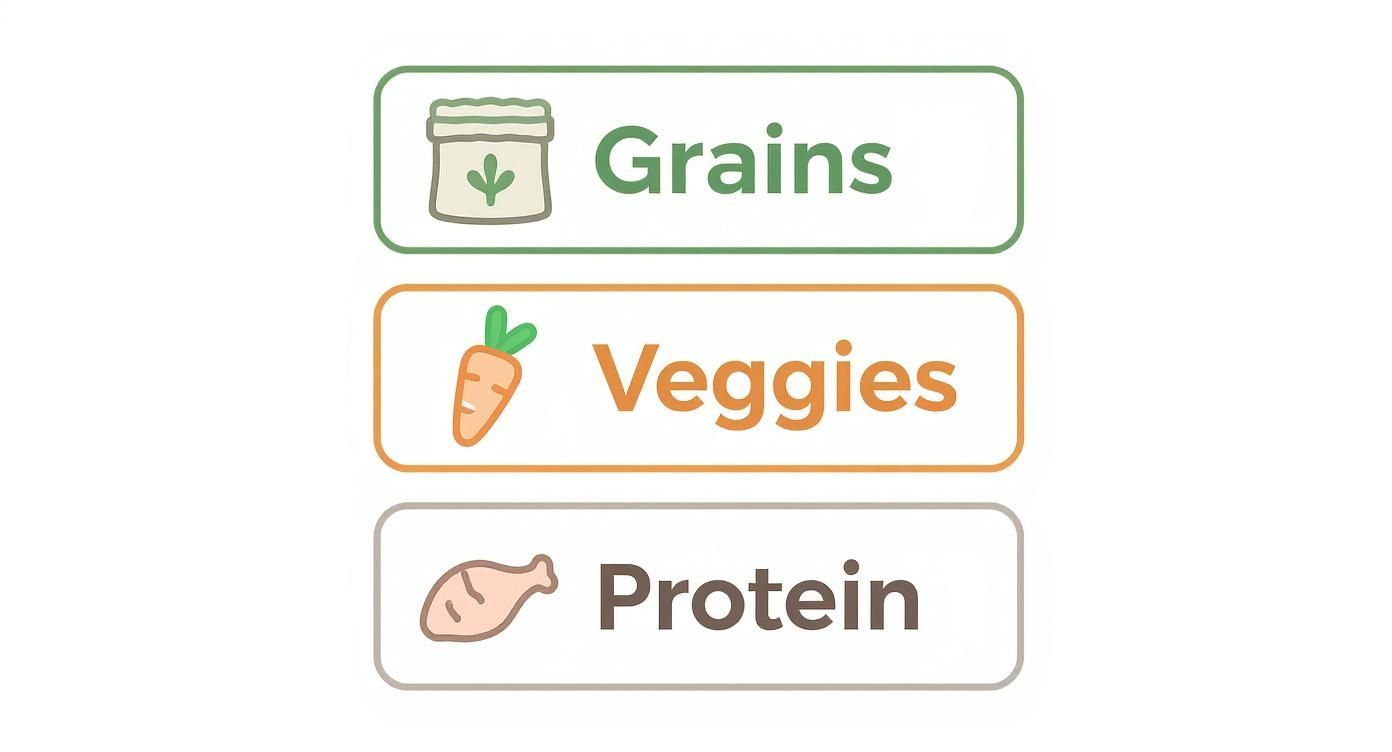
Basing your meals around a quality gluten-free grain, plenty of veggies, and a solid protein source is the simplest way to guarantee you're getting a well-rounded, satisfying meal every time.
Smart Swaps for Everyday Ingredients
Getting comfortable with a few key ingredient swaps is a total game-changer. It means you don't have to give up your old family-favourite recipes; you just need to adapt them. Knowing what to switch out makes gluten free meal planning way more flexible and takes the stress out of cooking.
Here’s a quick-reference guide for the most common swaps you'll likely make in your Aussie kitchen.
Easy Gluten Free Ingredient Swaps
| Ingredient to Replace | Recommended Gluten Free Swap | Best Used For |
|---|---|---|
| All-Purpose Flour | A good quality 1-to-1 gluten-free flour blend | Baking cakes, muffins, and thickening sauces. |
| Soy Sauce | Tamari or coconut aminos | Stir-fries, marinades, dressings, and dipping sauces. |
| Breadcrumbs | Crushed gluten-free crackers, almond meal, or blitzed GF oats | Crumb coatings for chicken or fish, and as a binder in meatballs. |
| Rolled Oats | Certified gluten-free rolled oats | Porridge, baking, and homemade granola. Note: Standard oats are often cross-contaminated. |
| Pasta | Pasta made from rice, corn, quinoa, or legumes (chickpeas, lentils) | All your favourite pasta dishes, from bolognese to mac and cheese. |
| Couscous | Quinoa or millet | Salads, side dishes, and as a base for stews. |
Once you get the hang of it, these substitutions become second nature. Keeping your pantry stocked with these gluten-free staples means you’re always ready to whip up something delicious. It’s this kind of prep that makes the gluten-free life not just manageable, but truly enjoyable.
Keeping Your Prepped Meals Fresh and Delicious
https://www.youtube.com/embed/840-7riYMro
You’ve put in the hard work on a Sunday afternoon, crafting a brilliant gluten-free meal plan. Now, let's make sure that effort pays off all week long. How you store and reheat your food is the difference between a sad, soggy Wednesday lunch and one that tastes just as good as the day you made it.
Your first line of defence is a good container. Personally, I swear by glass containers with airtight, snap-lock lids. They don't absorb stains or smells the way plastic often does, and they can go straight from the fridge to the microwave. Fewer dishes to wash is always a win.
A quick tip for salads: always store the dressing separately. Only toss it through right before you eat to keep everything crisp and fresh.
Smart Storage Times and Techniques
Knowing how long your meals will actually last is crucial for keeping things safe and tasty. A few simple guidelines can prevent a lot of guesswork and, more importantly, food waste.
- In the Fridge: Most of your cooked meals, like chicken with roasted veggies or a hearty lentil bolognese, will be perfect for about 3-4 days.
- In the Freezer: For anything you want to keep longer, the freezer is your best mate. Soups, stews, and curries are fantastic candidates and will last for a good 2-3 months.
When you're freezing food, always let it cool down completely first. This one small step is a game-changer for preventing freezer burn. I also like to use freezer-safe bags, squeezing all the air out before I seal them. It saves a tonne of space and really protects the texture of the food.
My personal trick for cut fruit and avocado? A little squeeze of lemon or lime juice does wonders. The citric acid stops things from browning, keeping your fruit salad or guac looking appetising for much longer.
Reheating for Maximum Flavour
Reheating isn't just about zapping something in the microwave until it's hot. The right method can bring a meal back to life.
For anything liquid-based like soups, stews, or our Jewel of Asia curries, a gentle reheat on the stovetop always gives the best, most even result.
If you're reheating roasted veggies or anything you want to keep crispy, skip the microwave. The oven or an air fryer is your best bet here. Just a few minutes is all it takes to revive that delicious texture and ensure your meal prepping efforts pay off, right through to Friday.
Common Questions About Gluten-Free Meal Planning
Diving into a new way of eating always kicks up a few questions. Getting gluten-free meal planning right isn't just about the food list; it's about understanding the logic behind it all. Let's dig into some of the most common hurdles people face.
How Do I Get Enough Fibre on a Gluten-Free Diet?
This is a brilliant question. When you ditch whole wheat, you're also ditching a major source of fibre, so you have to be a bit more strategic about getting it back in.
It's all about focusing on whole foods that are naturally gluten-free and packed with the good stuff.
- Legumes are your best mate: Think lentils, chickpeas, and black beans. They’re cheap, versatile, and absolute fibre powerhouses.
- Lean into GF whole grains: Quinoa, brown rice, buckwheat, and certified gluten-free oats are fantastic choices to build your meals around.
- Sprinkle in nuts and seeds: A spoonful of chia seeds or flaxseeds in your morning smoothie or on yoghurt makes a big difference. Almonds are a great snack, too.
Even simple additions like a handful of berries or a side of broccoli can give your daily fibre intake a serious boost.
What Are the Best Budget-Friendly GF Protein Sources?
Don't let anyone tell you that eating gluten-free has to break the bank. Sure, some specialty products can be a bit exy, but plenty of staple proteins are naturally gluten-free and easy on the wallet.
Your shopping list should feature things like eggs, canned tuna, lentils, and chickpeas. Tofu is another great, affordable option. When it comes to meat, chicken thighs or mince are often much cheaper than breast fillets and are perfect for curries, stir-fries, and pasta sauces.
You absolutely don't have to sacrifice nutrition to stay on budget. By building your meals around these naturally affordable proteins, you can plan a whole week of delicious, satisfying, and cost-effective food.
How Can I Stick to My Plan During Social Events?
Social gatherings can feel like navigating a minefield when you're starting out, but a little bit of planning makes all the difference.
If you’re off to a mate’s place for a barbie or dinner, offer to bring a substantial gluten-free dish to share. A big quinoa salad, a tray of roasted veggies, or a gluten-free dessert ensures you have at least one safe, delicious option you can tuck into without a worry.
Eating out? Most places have menus online now, so have a squiz before you go. If you're unsure, just give the restaurant a quick call to ask about their GF options and how they handle cross-contamination. A little prep work removes all the stress, so you can just relax and have a good time.
Ready to simplify your weeknights with delicious, guaranteed gluten-free meals? Jewel of Asia delivers chef-crafted Indian dishes straight to your door. Explore our menu and take the guesswork out of dinner at https://www.jewelofasia.com.au.
Share