


A Guide to Gulab Jamun Calories and Nutrition Facts
When you bite into a warm, syrupy gulab jamun, the last thing on your mind is probably calorie counting. But if you're curious, it helps to have a rough idea. A single, average-sized gulab jamun typically packs around 145 calories.
Of course, this is just a starting point. Like any treasured family recipe, the exact number can shift depending on who's making it, how big the pieces are, and how much of that delicious syrup gets soaked up.
What's Inside a Single Gulab Jamun?
So, where do those calories come from? It's not just sugar. A single gulab jamun is a mix of carbohydrates (mostly from the syrup and flour), fats (from the milk solids and frying oil), and a little bit of protein.
Digging into the numbers, one piece gives you more than just a sweet kick. Based on typical Australian nutritional data, you can expect:
- Approximately 18 grams of carbohydrates
- Around 7 grams of fat
- About 3 grams of protein
For a deeper dive into the nutritional specifics, you can explore the data compiled over at FatSecret Australia.
To put this into perspective, let's lay it out clearly. Here’s a quick look at what you’re consuming with one piece versus a more typical two-piece serving.
Gulab Jamun Nutritional Information At a Glance
This table breaks down the average nutritional values, making it easy to see how a small treat can add up.
| Nutrient | Per Piece (Approx. 50g) | Per Serving (2 Pieces, Approx. 100g) |
|---|---|---|
| Calories | ~145 kcal | ~290 kcal |
| Carbohydrates | ~18 g | ~36 g |
| Fat | ~7 g | ~14 g |
| Protein | ~3 g | ~6 g |
As you can see, enjoying a standard serving of two gulab jamuns means you’re looking at close to 300 calories. It’s a rich, decadent dessert, with most of its energy coming from sugars and fats—which is exactly what makes it so satisfying
The Anatomy of a Calorie-Dense Dessert
To really get your head around the calories in a gulab jamun, it helps to think of it as a small, sweet sponge. Its incredible richness is no accident; it’s the result of a three-step process that layers calories and flavour at every turn.
The journey starts with the dough itself. Traditionally, this is made from khoya—a dense, concentrated form of milk solids already rich in natural milk fats and protein. This dough is then deep-fried, usually in ghee or oil. As it cooks, the porous dough soaks up a surprising amount of fat, which is what gives the jamun that signature golden-brown crust and a melt-in-your-mouth texture.
The Syrup Soaking Stage
But the calorie-building doesn't stop there. Once fried, the hot, fatty spheres are dropped straight into a simmering sugar syrup, often scented with cardamom or rosewater. This is the final, crucial step. The warm, absorbent jamun greedily soaks up the sweet liquid, which dramatically increases its carbohydrate content. It’s this double-absorption process—first fat, then sugar—that turns a rich treat into a truly decadent dessert.
The process below shows just how each step contributes to the final calorie count.
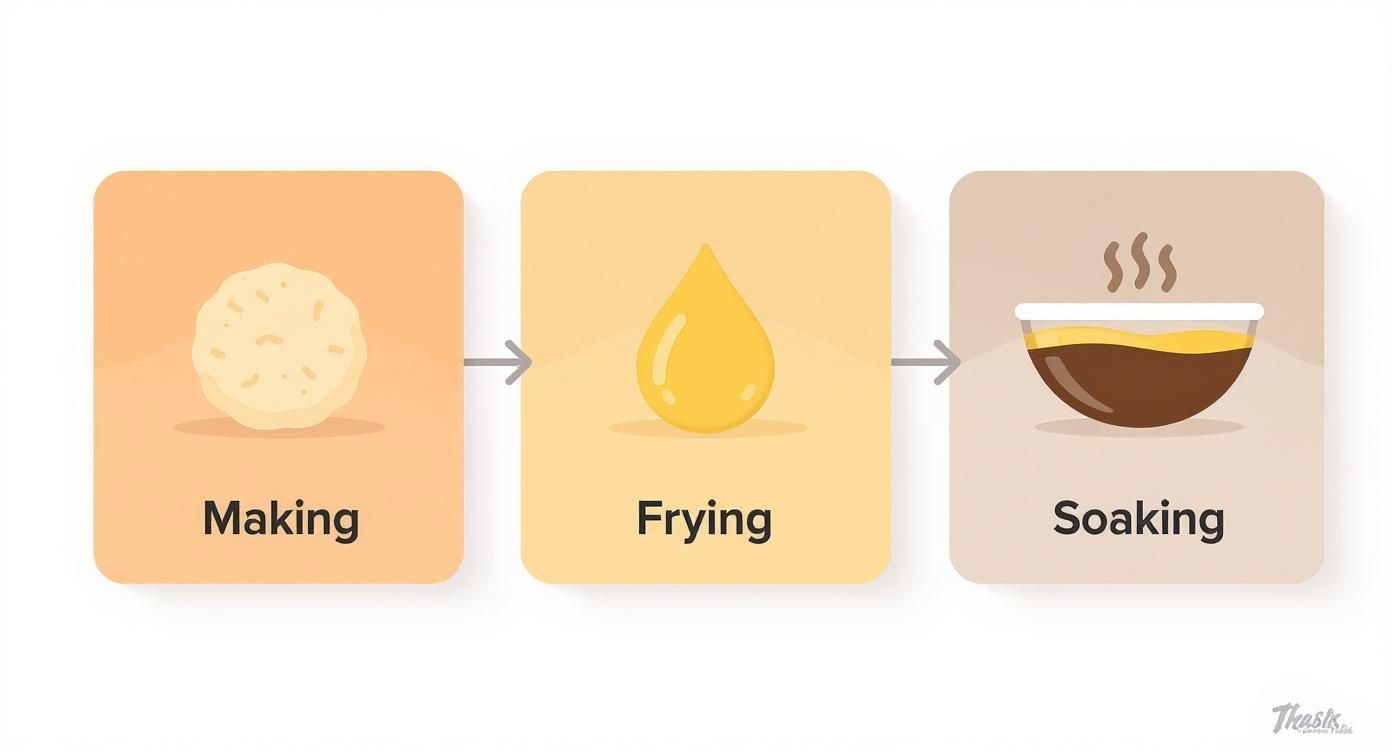
It’s this potent combination of milk solids, deep-frying fat, and sugar syrup that explains why gulab jamun packs such an energy punch. A typical 100-gram serving can land anywhere between 291 to 323 kilocalories, loaded with nearly 40 grams of carbohydrates, almost entirely from sugar.
Understanding what goes into your food is the key to enjoying it mindfully. It's a philosophy we apply to everything we do, including our range of healthy ready-made meals.
Why Not All Gulab Jamuns Are Created Equal
Ever wondered why one gulab jamun feels light and airy, while another is dense and syrupy? It’s a common mistake to think they all pack the same caloric punch, but the truth is, the final count can swing wildly depending on how they're made.
The biggest difference comes down to the heart of the dessert: the dough. A gulab jamun made the traditional way with khoya (milk solids that have been slowly simmered down) will naturally have a richer flavour and higher fat content. Those made with a simpler milk powder base tend to be lighter and less dense.
Size and Syrup: The Calorie Sponges
It's no surprise that size matters. A small, bite-sized piece you might pick up from a sweet shop could be around 120 calories. But a generous, fist-sized jamun served at a celebration could easily climb past 250 calories. The larger the jamun, the more oil it soaks up during frying and the more syrup it absorbs later.
And that brings us to the sugar syrup. How thick it is and, more importantly, how long the jamuns soak in it, directly determines the final sugar load.
Think of a gulab jamun like a sponge. The longer it sits in the syrup, the more sweetness it absorbs, which sends the carbohydrate and calorie count soaring. A quick dip versus a long soak makes a massive difference.
These details really matter. In fact, Australian health data suggests that traditional sweets can account for up to 10-15% of the daily added sugar intake in some households. Being mindful of the ingredients is a smart move. You can dive deeper into these nutritional findings on MyNetDiary.
So, next time you see different calorie estimates online, you’ll know why. And if you're feeling inspired to make your own, just remember when you're at an Indian shop near you that choosing between khoya and milk powder is your first decision in crafting the perfect homemade treat.
How Gulab Jamun Stacks Up Against Other Desserts
It's one thing to know the numbers, but putting gulab jamun calories into context is where it really clicks. When that craving for something sweet hits, it helps to know how your favourite treat compares to other popular options, both from India and closer to home.
Let's be honest: gulab jamun is a rich, decadent sweet. That delicious combination of being deep-fried and then soaked in a sweet syrup means it’s one of the more energy-dense desserts you can choose.
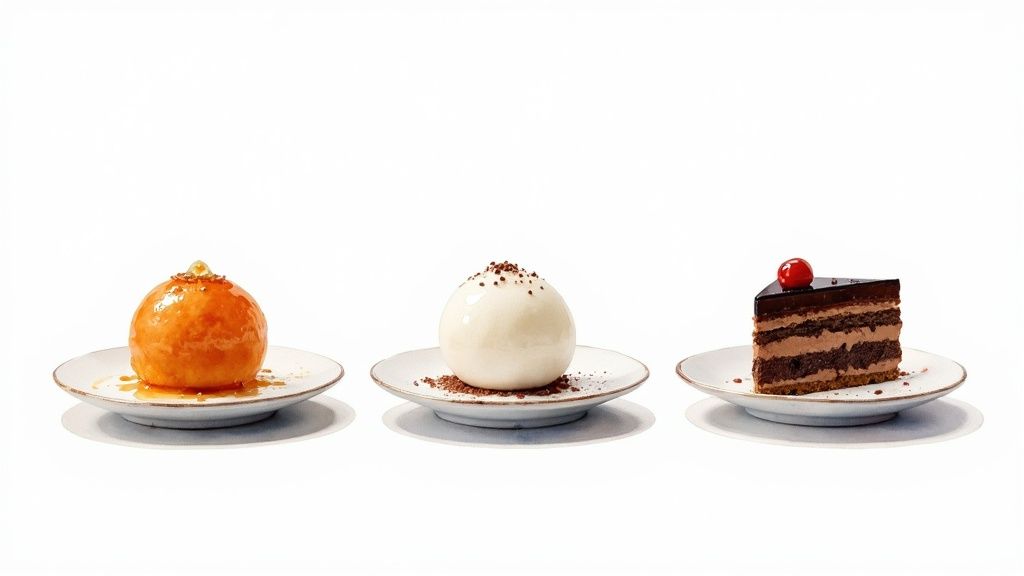
A Sweet Showdown: Indian vs. Western Desserts
So, how does a standard serving of two gulab jamuns really compare to a slice of cake or another Indian classic? Let’s put them side-by-side to see the full picture.
Dessert Calorie Comparison Per Typical Serving
Here's a quick look at how gulab jamun compares to other common treats you might find on a dessert menu.
| Dessert | Typical Serving Size | Estimated Calories |
|---|---|---|
| Gulab Jamun | 2 pieces (~100g) | ~290 kcal |
| Jalebi | 2 pieces (~100g) | ~300 kcal |
| Rasgulla | 2 pieces (~100g) | ~180 kcal |
| Chocolate Mud Cake | 1 slice (~100g) | ~400 kcal |
| Vanilla Ice Cream | 2 scoops (~100g) | ~210 kcal |
The numbers tell an interesting story. Gulab jamun is almost neck-and-neck with jalebi, which makes sense as both are deep-fried and soaked in syrup. But look at the difference compared to rasgulla!
The secret to rasgulla’s lower calorie count is all in the cooking method. Rasgulla is made from steamed chenna (a fresh cheese similar to paneer) and simply boiled in a light syrup. By skipping the deep-frying step entirely, its fat and overall calorie content are slashed dramatically.
It's also interesting to note that while gulab jamun is undeniably an indulgence, a dense slice of a classic Aussie chocolate mud cake often packs a much bigger punch. The high amounts of butter, sugar, and rich chocolate in the cake push its calorie count higher.
This comparison shows that while gulab jamun is a treat to be enjoyed mindfully, it’s not always the heaviest hitter on the menu. Knowing how these desserts differ gives you the power to choose the indulgence that feels right for you.
Enjoying Gulab Jamun More Mindfully
Finding out about the high gulab jamun calories doesn't mean you need to banish this beloved dessert from your life. Not at all. It's more about shifting your mindset from all-or-nothing restriction to thoughtful, mindful indulgence. This simple change in perspective allows you to truly savour every single bite without a side of guilt.
After all, real enjoyment comes from quality, not quantity. When you focus on the rich, complex experience of eating a gulab jamun, you'll often find that a small amount is more than enough to satisfy your craving.
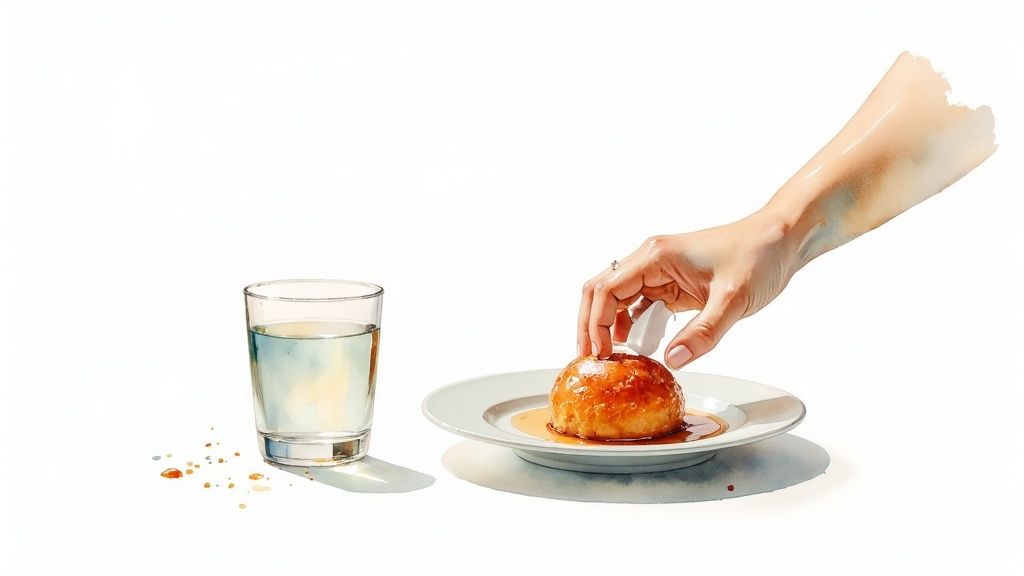
Simple Steps for Mindful Indulgence
Adopting a mindful approach is much easier than it sounds. It’s not about following strict rules but making a few conscious choices that empower you to enjoy your favourite treats as part of a balanced, healthy life.
Here are four practical tips you can try next time:
-
Practise Portion Control: The simplest trick is usually the most effective. Just stick to one gulab jamun. By setting this clear, easy-to-follow limit, you get to experience that incredible flavour without blowing out your daily calorie budget. Take your time with it—enjoy it completely.
-
Squeeze Out Excess Syrup: Before you take that first bite, give the gulab jamun a gentle press with your spoon. You’d be amazed how much sugar syrup this can release. It’s an instant way to cut down on sugar and calories without losing the beautiful texture of the dough ball itself.
-
Make It a Special Treat: Instead of viewing gulab jamun as a regular snack, think of it as a reward saved for special occasions. This not only makes the experience feel more meaningful and memorable, but it also naturally limits how often you eat it, helping you build a healthier relationship with indulgent foods.
-
Hydrate with Water: What do you drink with your dessert? Pair your gulab jamun with a glass of water instead of another sugary beverage. Water helps you feel full and avoids piling on unnecessary extra calories from other drinks.
Mindful eating is about awareness, not deprivation. By paying attention to portion sizes and making small adjustments, you can honour both your cravings and your health goals.
For practical advice on integrating this approach into your life, explore resources on how to keep a food journal for mindful awareness, which can truly transform your relationship with food. This principle of conscious consumption also ties into broader financial wellness, a topic we cover in our guide on how to eat healthy on a budget.
Common Questions About Gulab Jamun Nutrition
Even when you know the basic calorie count, practical questions always pop up. Getting into the finer details is what helps you fit this beloved sweet into your life without feeling like you're missing out.
Let's dive into some of the most common queries about its nutritional side, with some straightforward advice to help you make choices that feel right for you.
Is There a Low-Calorie Version of Gulab Jamun?
Traditional gulab jamun is what it is—a rich, calorie-dense treat. But modern twists have definitely made lighter versions possible. Some clever recipes skip deep-frying altogether, opting to bake or air-fry the dough balls. This trick alone dramatically cuts down the fat absorbed.
Others focus on the syrup, either by reducing the amount of sugar or swapping it for a natural sweetener like stevia. You might even stumble across versions made with sweet potato instead of khoya, which changes up the nutritional profile. Just remember, even these lighter versions are still a dessert, best saved for a special occasion.
Can Someone with Diabetes Eat Gulab Jamun?
This is a really important question. A classic gulab jamun is packed with sugar and refined carbs, which can send blood sugar levels soaring. Because of this, it’s generally not a good idea for anyone managing diabetes, at least not without some careful planning.
It’s absolutely essential to chat with your doctor or a registered dietitian first. They might give the green light for a very small portion on a rare occasion, eaten as part of a balanced meal. They could also point you towards sugar-free versions specifically designed for diabetic-friendly diets.
Your health is unique, and managing dietary needs requires a personalised approach. Professional advice is key when navigating high-sugar foods like gulab jamun, ensuring your choices support your overall wellbeing.
If you're keen to understand more about tracking your food intake, you might find a guide on how to calculate macronutrients and daily calorie needs helpful.
Can I Make Gulab Jamun with Less Sugar at Home?
You certainly can! This is the single biggest perk of making gulab jamun in your own kitchen—you're in complete control. It’s simple to cut back on the sugar in the syrup, or you could experiment with a sugar substitute you like.
Another great little trick is to just watch the clock. The less time the jamuns spend soaking in the syrup, the less sugar they’ll absorb. This instantly lowers the gulab jamun calories and sugar hit in every single piece.
At Jewel of Asia, we believe that enjoying authentic Indian food should be both delicious and convenient. While we don't currently offer gulab jamun, our menu features over 50 chef-crafted, preservative-free meals delivered to your door. Explore our healthy and homestyle options today at https://www.jewelofasia.com.au.
Share