



How to Find the Best Indian Shop Near Me in Australia
When you're searching for an "Indian shop near me," the quickest route is often to get more specific. Instead of a vague search, try something like ‘Indian spice shop in Parramatta’ or ‘South Indian groceries in Clayton’ on Google Maps. This simple trick helps you cut through the clutter and find exactly what you need, faster.
Your Guide to Finding Local Indian Shops Fast

When a craving for authentic home-cooked Indian food strikes, you don't want to waste time on a frustrating search. The secret lies in refining how you look online. Think about what you really need and add those details to your search.
Instead of just typing "Indian shop," be more descriptive. This small change in your phrasing tells search engines precisely what to look for, saving you from sifting through countless restaurant listings when all you're after is a bag of basmati rice.
Get Specific With Your Search Terms
For the best results, start with the basics and then add layers of detail. A powerful search combines the product you want with your location and any special requirements. It’s the surest way to help the search algorithm pinpoint the perfect match.
Here are a few examples of smart search queries that work:
- "Indian grocery delivery Sydney" for when you need ingredients brought right to your door.
- "Fresh paneer near me" to track down shops with quality dairy products.
- "Halal Indian butcher Melbourne" for specific dietary needs.
- "Shop open late for Indian spices" for those last-minute, after-hours emergencies.
By thinking like a local and using precise keywords, you transform a generic search into a targeted mission. This is the difference between finding an Indian shop and finding your Indian shop.
Understand How Search Works
Knowing a little about how search engines connect you with nearby businesses can make a big difference. At its core, it's about matching your specific query to a business that has listed those exact terms. This is why a shop specialising in South Indian goods is more likely to pop up if you search for "idli batter" rather than just "Indian food."
The more specific you are, the better the algorithm can do its job. A basic understanding of local SEO strategies shows you that businesses work hard to be found for these very keywords.
For more handy tips on finding specialty foods, check out our guide on locating an international grocery store near me for some extra insights.
Finding Your Go-To Spot for Authentic Indian Groceries
Starting with a quick map search is easy, but finding those truly authentic, hidden gems takes a bit more finesse. The trick is to get specific and think beyond a generic phrase like “Indian shop near me”.
After all, a sprawling Indian grocery store is a world away from a tiny mithai (sweet) shop. And that's completely different from a takeaway joint that happens to sell a few pantry staples on the side. Using the right keywords helps you cut through the clutter and find exactly what you’re after.
Fine-Tuning Your Search Keywords
Let’s be honest, a generic search isn't much help when you need fresh ingredients for a specific dish. It probably won't lead you to a store that has a high turnover of fresh produce.
Try getting more granular with your searches. For example:
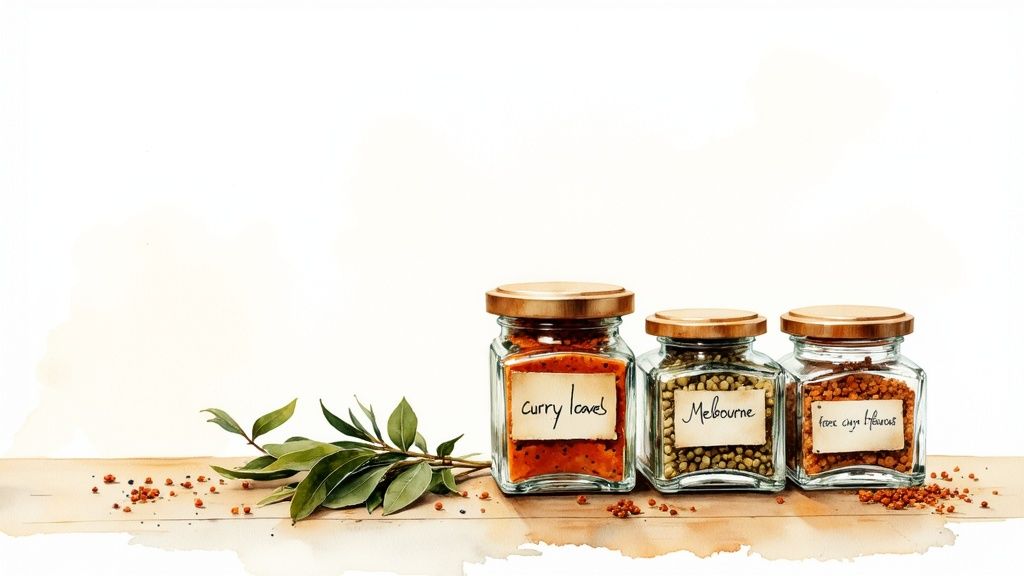
- Searching for "fresh curry leaves Melbourne" will likely guide you to shops known for quality produce.
- Typing "best gulab jamun Sydney" is a direct path to a dedicated sweet mart, not just a general grocer.
- Looking for "frozen paratha Brisbane" helps you pinpoint larger stores with decent freezer sections.
This little bit of detail makes a huge difference. If you're curious about why this works, it helps to understand the basics of search engine optimization, which is how these businesses get found online. Knowing how they market themselves helps you guess which search terms will give you the best results.
Don't underestimate the power of local community knowledge. The best tips almost always come from people who are shopping at these places week in, week out.
Tap Into Community Wisdom
Check out local Australian-Indian community groups on Facebook or browse through online forums. These places are absolute goldmines of firsthand experience. You'll find honest reviews, get tips on which shops have the freshest paneer deliveries, and discover where to buy those rare, regional masalas you'd never find at a major supermarket.
Popping a simple question like, “Where can I find good quality basmati rice near Parramatta?” will often get you a flood of passionate, helpful answers from locals who really know the area. That kind of direct feedback is often far more reliable than just looking at star ratings.
How to Vet a Shop Before You Visit

Alright, you've got a shortlist of potential Indian shops from your search. Before you jump in the car, a little online reconnaissance can save you a world of hassle. Taking just ten minutes to check out a place online is often the difference between discovering an absolute gem and wasting a trip on a shop with dusty, half-empty shelves.
First stop: the reviews. But you need to learn how to read between the lines. A single bad review about a grumpy cashier can probably be ignored, but if you see a pattern of complaints about expired products or wilted produce, that’s a serious red flag.
Look for consistency in the good reviews, too. Are people always raving about the fresh paneer, the friendly staff who know their stuff, or the reasonable prices? Those specific details give you a much better feel for a place than a generic star rating ever could.
A Quick Digital Deep-Dive
After scanning the reviews, pop over to the shop’s website or their social media pages. It’s not a deal-breaker, but a well-cared-for online presence is usually a good sign. It suggests the owners are actively engaged and actually care about their customers.
Here's what I always look for:
- Recent Photos of Their Stock: Do they share pictures when new shipments arrive? Keep an eye out for familiar, quality Indian brands like Aashirvaad atta, Toor dal, or Patak's pickles.
- Clear, Updated Info: Is the address and opening hours front and centre? There's nothing worse than turning up to find the doors locked.
- Mention of Specialty Items: If you're hunting for something specific like halal meat, regional masalas, or particular gluten-free flours, check if they mention it online. A quick search of their page can save you a call.
This rising demand for authentic ingredients isn't just a hunch; it's part of a much bigger picture. As a massive source of tourism for Australia, India's influence is growing. In the year ending May 2025, Australia saw 453,000 visitors from India, with their spending jumping by 14% to a huge AUD 2.7 billion. This cultural exchange is exactly why we're seeing more and better local shops catering to a taste of home. You can dig into these numbers in Australia's tourism rankings.
My Pro Tip: Don't underestimate a quick phone call. It’s the final check. Ring them up and ask if they have a specific item in stock, like fresh curry leaves or your favourite brand of ghee. Their tone and how helpful they are will tell you everything you need to know about their service and stock levels before you head out the door.
Navigating the Aisles Like a Pro
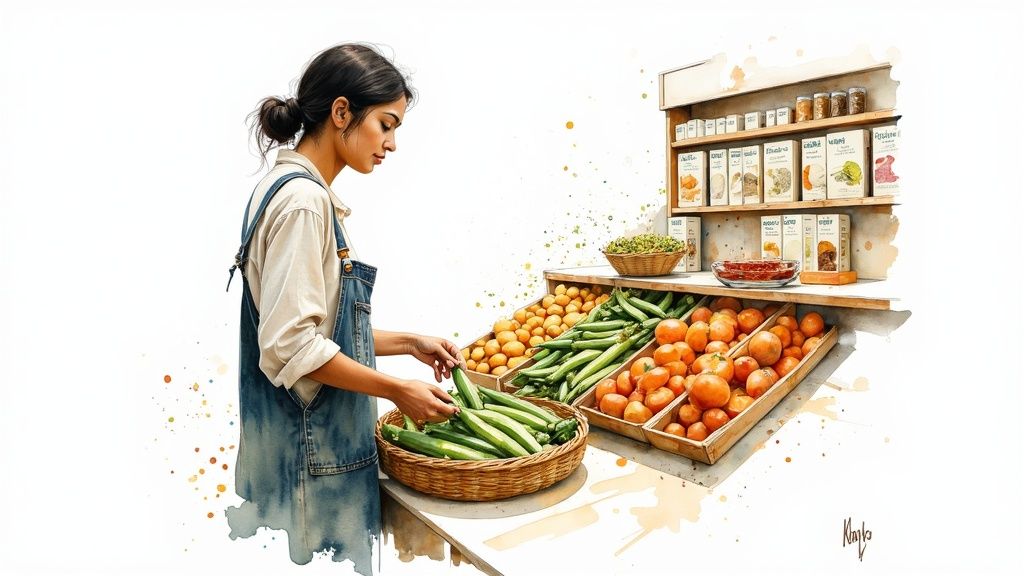
The moment you walk into a local Indian grocer, your senses come alive. The air is fragrant with a unique mix of spices, and the shelves are a kaleidoscope of colourful bags filled with lentils, flours, and snacks you just won't find at a major supermarket. It can feel a bit full-on at first, but it's really a culinary adventure waiting to happen.
Most shops have a pretty logical flow. You'll often find fresh produce right at the front, leading into aisles stacked high with different kinds of dals (lentils), rice, and flours. Venture a little deeper, and you’ll find the heart and soul of the store: the spice section. The refrigerated and frozen goods are usually at the back, holding treasures like paneer, yoghurt, and ready-to-heat parathas and kulfi.
What to Look For: From Spices to Fresh Produce
That wall of spices can seem intimidating if you're just starting out with Indian cooking. The good news? You don't need to buy everything at once. A few key essentials will get you started on dozens of incredible recipes.
If you want a solid foundation, grab these five:
- Turmeric Powder (Haldi): Gives that beautiful yellow colour and earthy flavour.
- Cumin Seeds (Jeera): The key to tempering (tadka) and adding a warm, nutty scent.
- Coriander Powder (Dhania): A mild, almost citrusy base for most curries.
- Red Chilli Powder (Lal Mirch): For that adjustable kick of heat.
- Garam Masala: A complex blend of "warming" spices added at the end for depth.
With just this handful, you've got the flavour base for countless classic dishes. For a deeper dive, our guide on where to find Indian spices near me has you covered.
The Essential Indian Grocery Shopping Checklist
To make your first few trips easier, here's a handy checklist of essentials to look for.
| Category | Essential Items | Pro Tip |
|---|---|---|
| Spices & Seasonings | Turmeric, Cumin, Coriander, Garam Masala, Mustard Seeds, Asafoetida (Hing) | Buy whole spices like cumin and coriander seeds and toast/grind them yourself for a much fresher, more intense flavour. |
| Lentils & Legumes (Dals) | Toor Dal (Split Pigeon Peas), Masoor Dal (Red Lentils), Chana (Chickpeas) | Rinse your dals thoroughly in cold water until the water runs clear before cooking to remove starch and impurities. |
| Grains & Flours | Basmati Rice, Atta (Whole Wheat Flour for rotis), Besan (Gram/Chickpea Flour) | Store your flours in airtight containers in a cool, dark place to keep them fresh and prevent pests. |
| Fresh Produce | Onions, Garlic, Ginger, Green Chillies, Fresh Coriander, Curry Leaves | When buying ginger, look for firm, smooth skin. It should have a sharp, spicy fragrance when you break a piece off. |
| Dairy & Pantry Staples | Ghee (Clarified Butter), Paneer (Indian Cheese), Full-Fat Yoghurt, Tamarind Paste | Full-fat yoghurt is a must for making rich, creamy curries and cooling raitas. Don't skimp on the low-fat versions here! |
This list is just a starting point, but it's a fantastic way to stock your pantry for authentic home cooking.
Don't Be Afraid to Ask
When you’re looking at the fresh produce, give it a good once-over. Okra (bhindi) should be small and snap easily; the larger pods can be tough and woody. Your coriander and mint should be a vibrant green and smell amazing, not sad and wilted. It never hurts to ask the shopkeeper which day they get their fresh deliveries—shopping then guarantees you get the absolute best quality.
Talk to the Shopkeeper: This is probably the best piece of advice I can give. These owners are a goldmine of information. They can recommend the best brand of ghee, suggest a specific lentil for a recipe, or even share a family secret for the perfect chana masala. Building that friendly rapport turns a simple shopping trip into a fantastic learning experience.
The demand for these authentic ingredients here in Australia is part of a massive retail trend in India. During the 2025 festive season, grocery and FMCG sales made up 12 percent of a record-breaking Rs5.4 trillion in trade. You can read more about India's retail sector performance on retail-insight-network.com. That booming consumer activity directly impacts the amazing variety and quality of products we get to enjoy in our local shops.
When to Shop for Indian Groceries Online
Sometimes, the best "Indian shop near me" isn't a physical shop at all—it's right on your screen. If you live in an area where local options are a bit thin on the ground, or you just value having your shopping brought to you, Australian online Indian grocers are an absolute game-changer.
The biggest win is obviously the convenience. You can browse a huge range of spices, dals, and specialty flours from your couch and get it all delivered to your door. The one catch? You can't personally pick out your fresh produce, like a bunch of vibrant coriander or a block of paneer, which might be a dealbreaker if you're particular about certain ingredients.
Choosing the Right Online Grocer
Before you start filling up your virtual cart, it pays to do a quick check on the online store to make sure you won't be let down. A little bit of research upfront can save you a lot of hassle later and ensure you get fresh, quality products delivered when you expect them.
Here’s what I always look for:
- Delivery Area and Costs: First things first, check if they actually deliver to your postcode and what the shipping fees look like. A lot of them offer free delivery if you spend over a certain amount, which is worth aiming for.
- Minimum Order Rules: See if there’s a minimum spend to place an order. This is pretty common for online grocery services, so it's good to know before you start shopping.
- Recent Customer Reviews: What are other people saying? I always scan recent feedback for comments on delivery speed, the freshness of their products, and how they handle any mix-ups or problems.
This shift to online grocery shopping isn't just happening here; it's a massive global trend. The Indian e-retail market has absolutely exploded, making India home to the world's second-largest online shopper base. It just goes to show how much people value the convenience and access that online stores provide. You can read more about how India shops online on bain.com.
It's not just about raw ingredients, either. Many online services now specialise in regional Indian meal kits or tiffin services, which are perfect when you're craving authentic flavours but don't have time for all the prep.
If maximum convenience is what you're after, you might want to check out our guide on choosing a ready-to-eat food delivery service. They're a brilliant way to get delicious, homestyle meals on those super busy days.
Your Questions About Shopping at Indian Stores, Answered
Walking into an Indian grocery store for the first time can be a fantastic sensory experience, but it's natural to have a few questions. Knowing what to look for and how to spot a good deal can turn a simple shopping trip into a rewarding culinary discovery.
Let’s clear up some of the most common things people wonder about when they start exploring their local Indian shops.
How Can I Tell if a Shop Has Quality Produce?
Trust your senses—your eyes and hands are your best tools here. Fresh greens like coriander, spinach, and mint should look vibrant and crisp, not sad and wilted. When you pick up vegetables like okra or bitter gourd, they should feel firm to the touch and snap cleanly, not bend limply.
My best tip? Just ask the staff when their fresh produce delivery arrives. Shopping on that day or the one right after guarantees you’re getting the absolute best of the batch.
Is It Really Cheaper to Buy Spices at an Indian Grocer?
Yes, almost without exception. When you're stocking up on the essentials of an Indian pantry, the value is just incredible.
You’ll quickly notice that bulk spices, lentils, chickpeas, and those big bags of basmati or sona masoori rice are significantly cheaper than what you’d find at a big-chain supermarket. It’s not just about the price, either—the quality and variety are often far better, which means more authentic flavour in your cooking.
I'm a Beginner. What Are the Must-Buy Spices?
It's easy to feel a bit overwhelmed by the wall of spices, I get it. The trick is to start with the foundational few that create the flavour base for countless Indian dishes.
If you’re just starting to build your spice collection, focus on these core five:
- Turmeric Powder (Haldi): Gives that beautiful golden colour and an earthy, warm flavour.
- Cumin Seeds (Jeera): Essential for tempering (called tadka) and adds a distinct nutty aroma.
- Coriander Powder (Dhania): A mild, almost citrusy spice that forms the backbone of many curries.
- Red Chilli Powder (Lal Mirch): This is how you control the heat. Get a mild one to start if you're unsure.
- Garam Masala: A fragrant blend of finishing spices that adds that final, complex layer of warmth and aroma.
With these in your kitchen, you have everything you need to start cooking some seriously delicious Indian food.
Too busy to shop for ingredients? Jewel of Asia delivers delicious, ready-to-eat Indian meals right to your doorstep, with over 50 authentic dishes to choose from. Explore our menu today
Share