





How to Find the Best Organic Health Food Store Near Me
Finding the best organic health food store near me is less about a lucky Google search and more about knowing how to use the tools at your disposal. You can save yourself a lot of time and petrol by using specific filters on platforms like Google Maps or Yelp to really zero in on the stores that fit your needs. This way, your first visit is much more likely to be a success.
How to Find Your Local Organic Store
Let's get a bit more strategic than just a basic search. The idea is to build a solid shortlist of potential go-to spots before you even step out the door. While location-based apps are a great start, a more focused approach is key.
Use Specific Search Filters
Instead of just typing "health food store" into Google Maps, think about what you really want. Getting more specific with your search terms will cut through the noise.
Try searching for things like:
- 'Bulk wholefoods near me' if you're looking to reduce packaging and buy exactly the amount of grains or nuts you need.
- 'Grass-fed butcher Sydney' to pinpoint shops that stock high-quality, ethically raised meat.
- 'Organic farm shop Melbourne' if you want produce that’s as close to the source as possible.
These kinds of detailed searches immediately filter out the big-chain supermarkets and point you toward genuine specialists. If you want to dig deeper, checking out certified programs and information from sources like TheAustralianOrganic resources can help you find truly authentic organic retailers.
Decode Customer Reviews
Once you’ve got a few places on your list, it's time to play detective with the reviews. Look beyond the simple star rating and hunt for patterns in what people are saying. Do customers consistently rave about the fresh produce? Is the staff mentioned as being particularly knowledgeable? Or are there recurring complaints about out-of-date products and unhelpful service?
A store's review section is a goldmine of insider info. I always pay close attention to comments about product availability and staff helpfulness—these little details tell you so much more about the real customer experience than any marketing ever could.
For example, a review that says, "The staff helped me find the perfect gluten-free flour and explained the differences," is a massive green flag. On the other hand, seeing multiple people mention wilted kale or dusty shelves is a definite red flag. This kind of vetting helps you find a store that truly lives up to its promises.
And if you're looking to add some unique global flavours to your healthy meals, finding a quality international grocery store can be a fantastic way to complement your organic shopping.
A Little Online Detective Work Saves a Lot of Legwork
Before you even think about grabbing your keys, a bit of online recon can save you from a wasted trip. Spending just a few minutes vetting a potential organic health food store from your couch is the smartest way to start. Think of a store’s website as your first port of call for crucial intel.
So, what are you looking for? Start with the seals of approval. In Australia, the gold standard is an official certification logo sitting proudly on their homepage. Keep an eye out for ACO Certified Organic, which is one of the most recognised marks. This isn't just a fancy graphic; it’s your assurance that the store and its products meet rigorous national standards for organic integrity.
This is a big deal, especially since the Australian organic market is both massive and a bit fragmented. We're talking an industry revenue of around AUD 2.8 billion in 2023–24. But with no single, government-mandated standard, these independent certifications are your best bet for genuine quality. If you're curious about the numbers, you can dive deeper into the Australian organic industry growth on ibisworld.com.
Scope Out Their Stock Before You Shop
Next, have a poke around their online product catalogue or even their Instagram feed. This is your chance to see if they actually have what you need before you burn any petrol. Are they stocked up on that specific brand of gluten-free bread you love? Do they have a decent range of plant-based cheeses, or is it just one sad-looking block of tofu?
I always recommend making a list beforehand. It helps keep you focused. For instance, if you're a coffee lover, you might want to look up some of the top organic coffee brands so you know exactly what to search for on their site.
Honestly, a well-organised website with an up-to-date product list tells you a lot. It suggests a professional outfit that actually cares about its customers. If their site is a ghost town with zero product info, it could be a red flag that their in-store selection is just as sparse.
You can learn almost everything you need to know in a quick five-minute website check. If a store has a detailed 'About Us' page talking about their local suppliers and a clear list of certifications, it shows they’re passionate and transparent—exactly what you want in an organic health food store.
Putting the Store Experience to the Test
Alright, you’ve done your digital homework and have a few promising organic health food stores on your list. Now for the fun part: seeing if they live up to the hype in person. This is where you trade the screen for the storefront, and trust me, what you see, smell, and feel when you walk through the door tells you everything you need to know.
A good store has a certain energy. The very first thing I always check is the fresh produce section. Are the veggies vibrant and crisp, or are they looking a bit tired and wilted? A big green flag is seeing a focus on seasonal produce. It’s a dead giveaway that they’re sourcing locally and care more about freshness than having everything available 365 days a year.
Before you grab a basket, take a moment to do a quick quality scan. Think of it as a mental checklist to make sure the place is legit.
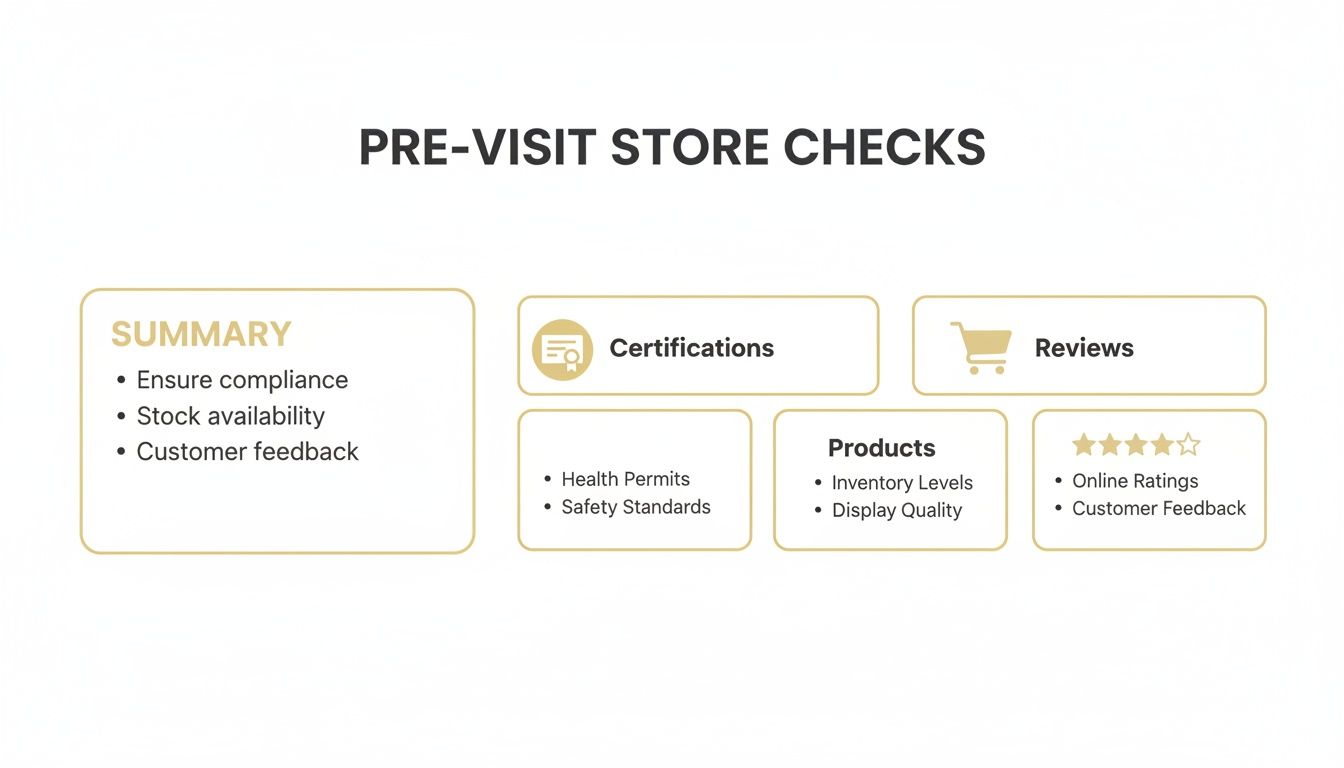
This little overview is a great reminder to connect what you saw online—like certifications and reviews—with what you’re seeing in front of you.
What to Look for Inside the Store
Once you’re past the fruit and veg, wander through the aisles. The general upkeep of the store speaks volumes about the owner’s standards. Dusty shelves, disorganised displays, or—worst of all—expired products are immediate red flags. It points to sloppy stock management and a real lack of care.
On the flip side, here are a few signs you’ve struck gold:
- Knowledgeable Staff: Can the person working there tell you where the eggs are from or recommend a good gluten-free flour? Staff who are genuinely passionate and informed are invaluable.
- Clear Labelling: All products, especially packaged goods, should have easy-to-read ingredient lists and visible organic certifications. Anything vague or missing is a no-go.
- Local Focus: I love seeing little signs or sections dedicated to local farms and producers. It shows the store is invested in the community and is likely getting fresher, higher-quality stock.
To make it even easier, I've put together a quick checklist you can mentally run through as you browse. It helps to have a clear idea of what separates the great stores from the merely okay ones.
Your In-Store Quality Checklist
| Store Area | Green Flags to Look For | Red Flags to Avoid |
|---|---|---|
| Fresh Produce | Vibrant, crisp, and seasonal items. Strong, fresh smell. | Wilted greens, bruised fruit, lack of seasonal options. |
| Packaged Goods | Clean shelves, well-organised, clear expiry dates, certified organic labels. | Dusty products, expired items, damaged packaging, vague labelling. |
| Fridge & Freezer | Proper temperature, organised products, no frost build-up. | Leaky fridges, messy freezers, expired dairy or meat. |
| Staff & Service | Friendly, helpful, and knowledgeable staff who can answer questions. | Disinterested employees, unable to provide info on suppliers or products. |
| General Vibe | Clean floors, good lighting, welcoming atmosphere, community noticeboard. | Unpleasant smells, clutter, poor lighting, disorganised checkout area. |
This table is just a guide, but it covers the main points that signal a store is committed to quality from top to bottom.
Ultimately, go with your gut feeling. A fantastic organic health food store should feel inviting, smell fresh, and be run by people who genuinely care about healthy living. When you find a place like that, doing your weekly shop goes from being a chore to a genuinely enjoyable experience.
So, Why Does Finding a Great Organic Store Matter So Much?
If you feel like you’re seeing organic options everywhere these days, you’re right. From dedicated aisles in Coles and Woolies to charming local grocers, there’s been a massive shift in how we shop for food. This isn't just a fleeting trend; it’s a real movement, and knowing a bit about the landscape can make you a much savvier shopper.
Understanding what's driving this change helps you see why one shop might have a huge range of fresh produce while another focuses on pantry staples, or why prices can vary so much. It puts you in the driver's seat.
The Organic Boom and What It Means for You
The demand for organic food in Australia has absolutely skyrocketed. The market hit around USD 1.1 billion in 2024 and is on track to double to a staggering USD 2.2 billion by 2033. This incredible growth, which you can read more about in the Australian organic food market report, is a direct result of people like you wanting better, cleaner food.
More demand means more choice, which is fantastic. But it also means you need to be a bit more discerning. When you search for an "organic health food store near me," you're really looking for a place you can trust to deliver genuine quality.
Choosing where to shop is about more than just convenience. By supporting a passionate, well-run local store, you’re investing in your own health, backing sustainable farming practices, and strengthening your local community’s economy. It’s a small act with a significant impact.
At the end of the day, having this context helps you look past the marketing noise. It allows you to find a store that genuinely aligns with what you value, turning a simple grocery run into a powerful choice for your wellbeing.
When a Trip to the Store Just Isn't Going to Happen
Let's be realistic. Some weeks, a trip to your favourite organic grocer is simply not on the cards.
Maybe you’re chained to your desk in the Sydney CBD, pulling late-night study sessions in Melbourne, or just completely wiped out after a long day. When that happens, the temptation to grab unhealthy takeaway is real. This is where modern food solutions can be a genuine game-changer.
Preservative-free, ready-to-eat meal delivery has become a lifesaver for busy professionals and students across Australia. Instead of defaulting to fast food, you can have high-quality, genuinely nutritious meals brought right to your door.
This isn’t just about convenience; it reflects a major shift in how we approach food. As more Australians prioritise their health, the demand for accessible organic options has skyrocketed. In fact, the entire market is tilting towards online and home delivery models. If you're keen on the numbers, you can explore the data on Australian organic market trends here.
Weighing Up the Pros and Cons
Of course, no solution is perfect. Meal delivery comes with its own set of benefits and drawbacks, and knowing both sides will help you decide if it’s a good fit for your routine.
What are the big wins with meal delivery?
- Ultimate Time-Saver: It completely cuts out the shopping, prepping, and cooking. That’s hours back in your week.
- Built-in Portion Control: Meals arrive pre-portioned, making it easier to manage what you eat and dramatically cut down on food waste.
- Dietary Variety on Tap: Many services have incredible variety, offering everything from vegetarian and vegan to gluten-free menus.
On the flip side, you have to consider that it’s often more expensive than cooking from scratch, and there’s the environmental footprint of the packaging to think about.
The trick is to find a service that really nails the balance between convenience and quality. Look for companies that are transparent about using fresh, natural ingredients and make a real effort with sustainable packaging. That way, you’re still making a choice that aligns with your values.
At the end of the day, these services offer a brilliant, practical alternative when you simply can’t get to an organic health food store. If you’re looking for a way to maintain a healthy diet without the stress, exploring healthy ready-made meals is a fantastic place to start.
Your Top Questions About Finding Organic Food Answered
Let's be honest, trying to find genuinely good organic food can feel a bit overwhelming at first. When you start searching for an "organic health food store near me," you'll probably run into a few common sticking points. Let's clear those up so you can shop with confidence.
Probably the biggest question I hear is about the labels. What’s the real story behind ‘certified organic’ versus just plain ‘organic’? In Australia, the difference is night and day.
Cracking the Code on Organic Labels
When you see a 'certified organic' logo on a product, like the one from Australian Certified Organic (ACO), it’s a rock-solid guarantee. It means an independent body has confirmed the product meets incredibly strict national standards, covering everything from the soil it was grown in to how pests were managed.
On the other hand, the word 'organic' by itself isn't legally protected. It can sometimes be more of a marketing term than a promise. If you want to be certain, always hunt for that official certification seal.
Think of the certification logo as your shortcut to trust. It tells you instantly that the product has gone through the wringer to meet high standards, so you know exactly what you’re getting for your money. No more guesswork.
Of course, the next question is usually about the cost. It’s a fair point, especially if you're a student or just trying to keep your budget in check. We've got some great advice on this in our guide on how to eat healthy on a budget.
Finally, many people wonder how to spot a store that truly champions local Aussie producers. The easiest way? Just talk to the staff. The best stores are run by people who are passionate about their products and are often excited to tell you about the local farms they work with. Also, keep an eye out for signs in the store or sections on their website that showcase their local suppliers—it’s a massive green flag.
When you're flat out and just don't have time to shop, Jewel of Asia has your back. We deliver preservative-free, ready-to-eat Indian meals right to your door in Sydney, Melbourne, and Brisbane. Get that authentic, wholesome food without any of the fuss at https://www.jewelofasia.com.au.
Share