




A Guide to the Hottest Sauce in the World
The quest to find the hottest sauce in the world is more than just a search for a condiment; it's a dive into a global culture hell-bent on pushing the absolute limits of spice. While different sauces constantly battle for the top spot, they all trace their ferocious heat back to a handful of superhot chilli peppers, each one a monument to pure, scientific pain.
Stepping into the World of Extreme Heat
Welcome to the thrilling, and let's be honest, slightly intimidating world of super-hot sauces. We're going way beyond the friendly kick of your local takeaway to find out what it really takes for a sauce to be crowned the "hottest in the world." This isn't just about melting your face off; it’s about a passionate community of ‘chilli heads’ who live for the science and craft behind the heat.
To really get what makes these sauces legendary, we need to start with the basics. It’s all about the ingredients that pack the punch and how we even begin to measure that kind of power.
The Foundations of Fire
The whole culture of extreme spice rests on a few key ideas. Without getting these, the difference between a habanero and a world-record holder is just a number on a bottle. Here’s what you need to know:
- The Scoville Scale: This is the universal language of heat. Think of it as the Richter scale for chilli, giving us a way to measure the intensity of that burn.
- Legendary Peppers: We’ll meet the botanical superstars behind the fire. These are the household names in the chilli world—from the once-feared Ghost Pepper to modern monsters like the Carolina Reaper—that provide the raw firepower.
- The ‘Chilli Head’ Culture: This is the community of die-hard fans who tackle insane eating challenges, breed new pepper hybrids, and share a genuine love for the complex flavours hidden underneath all that spice.
At its heart, the race for the world’s hottest sauce is a fascinating mix of agricultural science, kitchen creativity, and a healthy dose of adrenaline. It’s about so much more than a bottle of sauce; it’s a shared experience.
This guide will lay the groundwork, giving you everything you need to understand our obsession with extreme heat and how the hunt for the next hottest thing continues to evolve. Let’s get into the passion that fuels this fiery community.
How We Measure the Language of Heat
To get a real sense of what the hottest sauce in the world actually means, we need a way to speak its language. That language is the Scoville scale, the go-to ruler for measuring the punch packed by chilli peppers. It’s all about measuring capsaicinoids, the chemical compounds responsible for that fiery sensation we know and love (or fear).
Think of it like this: if you took a single drop of pepper extract, the Scoville rating tells you how many drops of sugar water you'd need to add until you couldn't taste any heat at all. A humble bell pepper, with zero heat, clocks in at 0 Scoville Heat Units (SHU). It’s the baseline.
A jalapeño, which gives a nice kick to your nachos, typically lands between 2,500 and 8,000 SHU. This means it could take up to 8,000 drops of sugar water to completely dilute the heat from one drop of its essence. This clever, if subjective, method was cooked up by American pharmacist Wilbur Scoville way back in 1912, relying on a panel of very brave human tasters.
From Taste Buds to Technology
Thankfully, we've moved on from relying solely on human taste. These days, the process is far more scientific and precise. Labs use a high-tech method called High-Performance Liquid Chromatography (HPLC) to get the job done.
This machine directly measures the concentration of capsaicinoids, giving a consistent, objective SHU rating without anyone having to risk their taste buds. It's how we can confidently chart the heat of peppers and sauces that soar into the millions on the Scoville scale—a level of intensity that would be downright dangerous to test the old-fashioned way.
The Scoville scale isn't just a number; it's a way to understand the vast difference between everyday heat and the engineered intensity found in the world's most extreme sauces. It transforms an abstract sensation into a tangible measurement.
The infographic below paints a picture of the world of extreme heat, covering everything from the Scoville scale itself to the superhot peppers that push the limits.

It really shows that the chase for the ultimate heat is a mix of hard science, incredible agricultural skill, and a global community that just can't get enough spice.
Putting Extreme Heat into Perspective
To really appreciate the mind-boggling numbers at the top end of the scale, it helps to see them side-by-side with some more familiar peppers. This table puts the heat levels of everyday chillies up against the titans of the superhot world.
Chili Heat Comparison on the Scoville Scale
| Pepper or Sauce Type | Typical Scoville Heat Units (SHU) |
|---|---|
| Bell Pepper | 0 |
| Jalapeño Pepper | 2,500 – 8,000 |
| Habanero Pepper | 100,000 – 350,000 |
| Carolina Reaper | 1,640,000 (Previous Record Holder) |
| Pepper X | 2,693,000 (Current Record Holder) |
As you can see, the leap from a spicy habanero to a Carolina Reaper is absolutely massive. But then, the jump from the Reaper to the current champion, Pepper X, is another giant step up.
Having this context for the Scoville scale is crucial as we get ready to meet the pepper that currently wears the crown.
Meet Pepper X: The New King of Heat
For what felt like an eternity, the Carolina Reaper was the undisputed champion of the chilli world. It was a legend. But in the ultra-competitive game of breeding super-hot peppers, records are always temporary. Now, there's a new monarch on the Scoville throne: Pepper X.
This wasn't some happy accident in a garden patch. Pepper X is the result of a decade of painstaking, meticulous science driven by US chilli pioneer Ed Currie from the PuckerButt Pepper Company—the very same mastermind who gave us the Reaper.
The journey involved countless cross-breeding experiments, starting with a Carolina Reaper and crossing it with what Currie would only describe as a "brutally hot" mystery pepper. The mission was simple but incredibly ambitious: to push the natural capsaicin content to its absolute physical limit. The result is a gnarly, wrinkled little monster with a heat that doesn't just hit you; it builds and builds.
A Staggering, Record-Shattering Achievement
It all became official in late 2023. Guinness World Records formally crowned Pepper X the world's hottest chilli pepper, and the numbers were just staggering. It registered an average of 2.69 million Scoville Heat Units (SHU).
To put that in perspective, it completely demolished the Reaper's already formidable record of 1.64 million SHU. This wasn't a minor bump; it was a quantum leap, confirmed through rigorous lab tests at Winthrop University. The achievement was a massive story, covered by food journalists and chilli fans around the globe.
Pepper X isn’t just a spicier Reaper. It represents a huge step forward in botanical science. The decade of patience and dedication it took shows you just what's needed to push the boundaries of what's even possible with super-hot peppers.
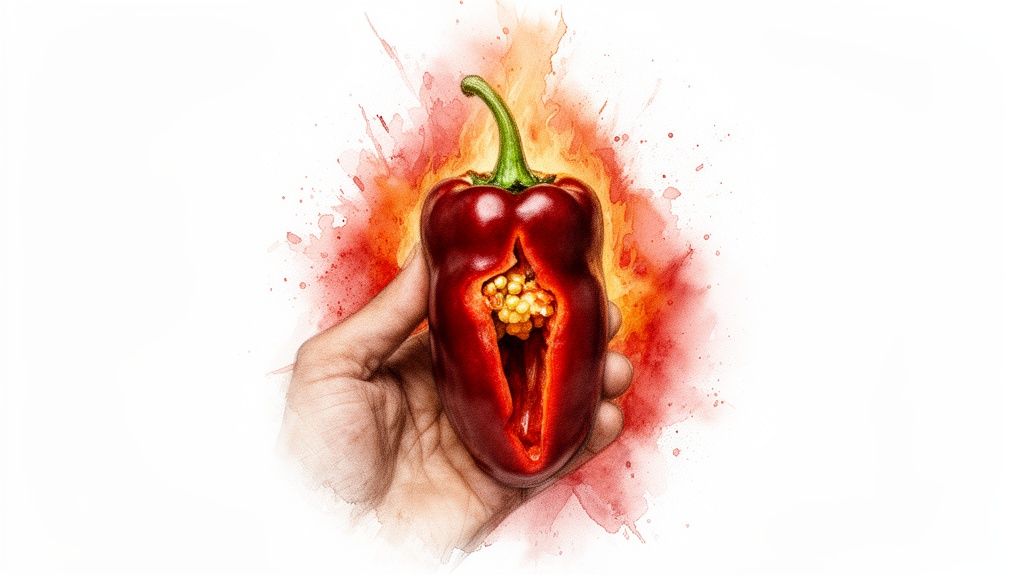
This incredible jump in heat cements Pepper X's place in history, setting a new benchmark for chilli breeders everywhere.
Flavour Before the Firestorm
So, is it just a weaponised vegetable? Not quite. What makes Pepper X more than just a scientific stunt is its reported flavour. Before the all-consuming fire kicks in, people who've actually tried it describe a surprisingly pleasant, complex taste.
Here’s what they report:
- Earthy Tones: It starts with a deep, robust base flavour.
- Bright Citrus: A sharp, zesty note quickly follows, cutting through the earthiness.
- A Touch of Sweetness: There's a fleeting moment of sweetness before the inferno truly begins.
This complexity is entirely intentional. Ed Currie has always said he breeds for flavour first, heat second. But make no mistake, once that initial taste fades, the heat from Pepper X is an overwhelming, all-encompassing experience that can linger for hours. It has single-handedly redefined what it means to be the hottest pepper—and, by extension, the key ingredient for the hottest sauce in the world.
The Sauces That Bottle the Inferno
It’s one thing to grow a pepper that breaks world records, but it’s another challenge entirely to capture that apocalyptic power in a bottle. This is where the real artistry comes in. Skilled sauce makers are the alchemists of the chilli world, finding clever ways to make the fire from peppers like Pepper X approachable—even if only for the bravest among us.
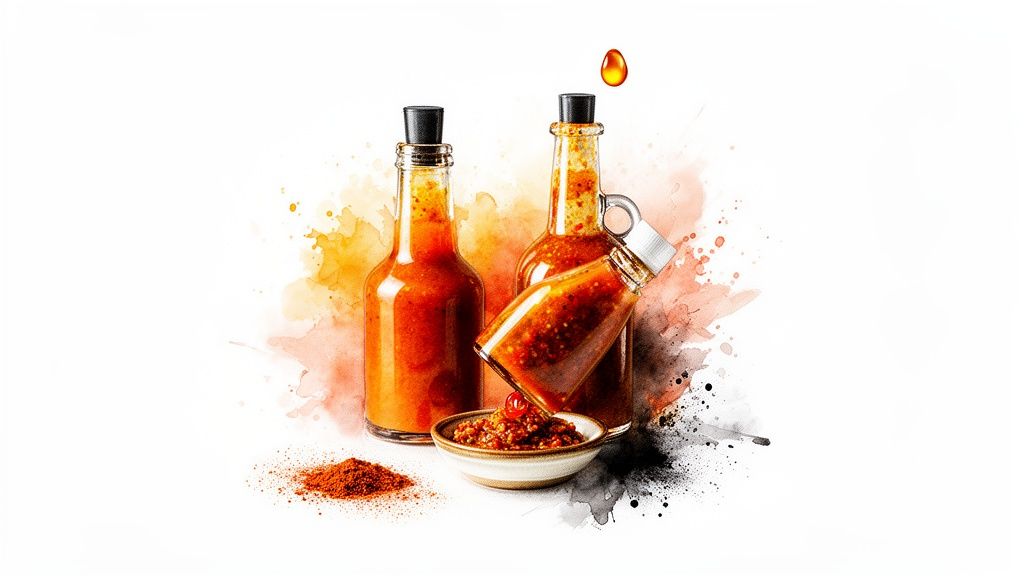
Crafting these sauces is a delicate balancing act. The goal is to harness the pepper's full intensity without completely destroying its flavour. This means getting creative with the methods. A sauce might use a pepper mash for a more rustic texture, a pure powder for a dry, lingering heat, or even a distillate to isolate the capsaicin for a cleaner, more immediate burn.
The Last Dab: The Apex of Heat and Hype
When you talk about the hottest sauces on the planet, one name always seems to rise to the top: The Last Dab. Made famous by the viral YouTube interview show Hot Ones, this series of sauces has become the final boss for celebrities and a holy grail for collectors. It was one of the very first commercial products to feature the legendary Pepper X, bringing world-record heat out of the lab and into the hands of the public.
Aussie hot sauce lovers recently got a taste of this peak with The Last Dab Xperience, which clocks in at a staggering 2.693 million SHU. Containing over 91% Pepper X, it was launched as the grand finale for Hot Ones Season 25 and quickly became a top seller.
These sauces are more than just condiments; they are cultural touchstones. They represent a shared challenge, a benchmark for spice tolerance that connects a global community of chilli enthusiasts through a mutual respect for extreme heat.
The incredible popularity of sauces like The Last Dab has pushed super-hot condiments from a niche hobby right into the mainstream. People collect them, trade them, and treat each new release with serious excitement. It's also inspired a new wave of artisanal sauce makers to experiment with their own fiery blends. For anyone thinking of whipping up their own inferno, mastering techniques for thickening chicken wing sauce is a great place to start for getting that perfect consistency.
Crafting a Global Community
At the end of the day, the quest for the hottest sauce in the world has done more than just burn a few taste buds—it's built a vibrant, worldwide community. Fans connect online to swap tasting notes, post hilarious reaction videos, and hunt down rare bottles from specialty shops. If you're looking for unique ingredients to make your own mark, you might find our guide on locating an international grocery store near me handy.
This shared passion transforms a simple bottle of hot sauce into a membership card for a global club. It’s proof that even the most intense experiences are best when they’re shared—one scorching drop at a time.
Alright, let's tackle this beast. Venturing into the world of super-hot sauces is a real thrill, but it's not something to be taken lightly. Handling sauces that pack this much punch requires a bit of know-how and a lot of respect. It’s the difference between a great story and a really, really bad time.
The number one rule? Start small. I mean, ridiculously small. For anything that boasts millions of Scoville Heat Units, you’re not taking a spoonful. You’re dipping the very tip of a toothpick in. That’s it. This gives you a baseline for the heat without sending your system into total shock. Trust me, going in too hot, too fast is a rookie mistake you don't want to make.
So, What’s Actually Going to Happen?
When you taste a seriously hot sauce, your body is going to react. It’s just how we’re wired to handle capsaicin. Knowing what's coming can help you ride it out instead of panicking.
You can pretty much count on these things happening:
- A fire in your mouth: This is the main event. The burn will hit your mouth and throat, and you might even feel it in your stomach.
- The sweats: Your internal thermostat will go haywire, trying to cool you down. Expect some sweating and maybe a flushed face.
- Hiccups and cramps: Capsaicin can irritate your diaphragm and digestive tract, leading to some unexpected hiccups or a bit of stomach discomfort.
- Waterworks: Your eyes will water and your nose will run. It’s just your body’s natural defence, trying to flush the fiery culprit out.
These reactions are all part of the experience and they won't last forever. The trick is to stay calm and have your cool-down strategy ready before you even open the bottle.
Look, the whole point of this is to enjoy the flavour and the exhilarating rush of the heat. It's not about inflicting pure pain on yourself. A safety-first approach is what separates a true chilli lover from someone who’s just having a miserable afternoon.
Your Heat-Busting Toolkit
When the fire gets a bit too wild, what you reach for is crucial. Some things work wonders, while others will just fan the flames.
Dairy and fats are your best mates here. Milk products contain a protein called casein, which is a lifesaver because it actively breaks down the capsaicin and washes it away from your pain receptors. A glass of full-cream milk, a big spoonful of yoghurt, or even a scoop of ice cream will provide genuine, fast-acting relief.
On the flip side, stay away from water. It's the absolute worst thing you can drink. Capsaicin is oil-based, so all water does is spread it around your mouth, making the burn feel even more intense. It’s like trying to put out a grease fire with water – a terrible idea. Stick to the good stuff, and you’ll manage the heat like a pro.
Pairing Extreme Heat with Everyday Flavour

It might sound crazy, but the hottest sauce in the world can be about more than just a pain-endurance test. When used correctly, it can unlock some truly incredible flavours. The trick isn't about how much you use, but how precisely you use it. A tiny micro-dose of an extreme sauce can introduce unique floral, smoky, or fruity notes that you just won't find in your everyday chillies.
Think of these super-hot sauces as a flavour concentrate, not a condiment you'd slather over your chips. Picture adding a single, tiny drop from a toothpick into a big pot of creamy coconut curry or a smoky barbecue marinade. That minuscule amount is all it takes to lift the entire dish, weaving in a new layer of complexity without blasting your taste buds with pure, untamed heat.
Mastering the Art of Balance
Working with extreme heat is a game of technique and balance. To make sure you don't create fiery "hot spots" in your meal, never apply the sauce directly to a finished plate of food. The best way to tame the beast is to dilute it first, making sure that intense heat is spread evenly.
Here are a few ways you can do it:
- Blend into a Base: Stir a tiny speck of hot sauce into a larger amount of a fatty or creamy ingredient. Yoghurt, sour cream, mayonnaise, or even oil work beautifully as a buffer, mellowing the intensity while carrying the flavour through your recipe.
- Create Infused Oils: Add a pin-prick of sauce to a bottle of good olive oil. Give it a day to infuse, and you’ve got a custom chilli oil that’s perfect for drizzling over pizzas, pastas, or roasted veggies.
- Boost Your Marinades: Whisk a micro-drop into your meat or vegetable marinades. As it cooks, the heat will soften slightly, leaving behind its unique character and a pleasant, lingering warmth.
Using the hottest sauces in cooking is like adding a rare spice. It’s not about the brute force of the heat, but about the subtle and complex background notes it contributes to a dish's overall flavour profile.
And the heat doesn't have to stop with food. A refreshing hot and spicy Caesar can offer a completely different kind of fiery kick. Building balanced flavour is a skill, and understanding how spices play together is key; our guide on the role of cumin in Indian cuisine is a great place to start learning.
Common Questions About the Hottest Sauces
Diving into the world of super-hot sauces always sparks a bit of curiosity—and maybe a little fear. It's only natural to have questions, especially when you're talking about the hottest sauce in the world. Let's clear up some of the most common ones.
The first question is almost always about safety. Can this stuff actually hurt you? While eating an extremely hot sauce will definitely be uncomfortable (we're talking stomach cramps and a world of regret), it’s highly unlikely to cause permanent damage in a healthy person. That scorching feeling is just your pain receptors screaming about capsaicin; you aren't actually being burned.
Understanding the Heat Source
People often wonder if all heat is the same. Is there a real difference between the kick from a pepper and the fire from an extract? You bet there is.
-
Pepper-Based Heat: This heat comes straight from the source—the chilli itself. It delivers a more rounded, complex burn that tends to build slowly and stick around, bringing the pepper’s unique flavour along for the ride.
-
Extract-Based Heat: This is pure, weaponised spice. Using concentrated capsaicin extract, these sauces deliver a vicious, sharp, and immediate jolt of heat. It's how sauces manage to climb into the multi-million SHU territory.
Think of it like this: pepper heat is a flavour journey with a fiery destination, while extract heat is like teleporting straight into the inferno.
Finally, can you actually get used to this stuff? Yes, you absolutely can build up a tolerance. By regularly eating spicy food, you gradually desensitise your pain receptors. It’s a slow and steady process, but your palate will eventually adapt, letting you enjoy hotter and hotter sauces without feeling overwhelmed.
If you have more specific questions about our ingredients or products, you can find a lot more information over in our frequently asked questions section.
Ready to add some flavourful, authentic spice to your meals without the extreme heat? Explore the delicious, chef-crafted Indian dishes from Jewel of Asia and have them delivered straight to your door. Visit us at https://www.jewelofasia.com.au to see our menu
Share