







Healthy Eating on a Budget Without Sacrificing Taste
Eating healthy on a budget isn't about sacrifice; it's about strategy. The truth is, eating well can be far more affordable than most people think. It just takes a few small, practical shifts in how you plan, shop, and cook. This guide will walk you through exactly how to make it happen.
The Real Price of Your Weekly Groceries
It’s no secret that the cost of living in Australia has everyone taking a second look at their grocery receipts. Many of us just assume that filling the trolley with nutritious food comes with a hefty price tag, but what if the opposite were true? Let's challenge that myth. Think of healthy eating not as an expense, but as one of the smartest investments you can make in your family's future.

The financial squeeze so many Australians are feeling is very real. When the budget gets tight, it’s often the fresh food aisle that gets sacrificed for cheaper, processed alternatives. The problem is, this kind of short-term saving can end up costing you a lot more in the long run.
The Hidden Cost of an Unhealthy Diet
The link between what we eat and our long-term health is undeniable, and the financial fallout is staggering. As Australians grapple with the cost-of-living crisis, many are forced to cut back on nutritious foods, placing a huge burden on our national health system.
In fact, diet-related risk factors now cost us a whopping $16.2 billion annually. That figure really puts the hidden price of skimping on healthy meals into perspective. It’s not just about today’s grocery bill; it's about tomorrow's potential medical expenses. You can find more data on these diet-related costs from the Australian Institute of Health and Welfare (AIHW).
This guide is designed to give you practical advice you can start using today. We'll show you how to navigate the supermarket aisles like a pro, plan your meals effectively, and build a pantry that sets you up for success.
Small Changes, Big Savings
You don't need to completely overhaul your life to eat healthily on a budget. It all starts with small, intentional changes that really add up over time.
- Shop Strategically: Learning to read unit prices, buying produce that's in season, and giving store brands a go can slash your weekly spend.
- Plan Your Meals: A little bit of forethought is your best defence against impulse buys and food waste—two of the biggest budget-breakers out there.
- Cook from Scratch: It’s almost always cheaper (and healthier) to prepare your own meals instead of relying on pre-made options or takeaway.
The key takeaway is this: when you control your food budget, you gain more control over your health. By focusing on whole foods and smart preparation, you nourish your body and protect your wallet at the same time.
For a deep dive into reducing your food expenses, check out these proven grocery saving tips. Knowing where to shop can also make a huge difference; our guide on finding an international grocery store near you can open you up to more diverse and affordable options.
Let's get into the step-by-step plan to make healthy, budget-friendly eating your new reality.
Your Kitchen Budgeting Blueprint
Before you even think about grabbing a trolley, the real savings start at home. Getting a handle on healthy eating without breaking the bank means you need a solid game plan for your kitchen finances. This isn't about being a scrooge; it's about taking control and making your grocery money work smarter, not harder.
Putting together a simple blueprint shifts you from being a reactive shopper—just grabbing whatever catches your eye—to a proactive planner. It’s an approach that makes every trip to the supermarket more intentional and much kinder to your wallet and your health goals.
First, Do a Full Pantry and Freezer Audit
You can't plan a journey without knowing your starting point. And for most of us, there are hidden gems lurking in the back of our cupboards and freezer. Taking stock of what you already have is the first, most crucial step.
Just give yourself 20 minutes to pull everything out. Seriously. You'll probably unearth half-empty bags of pasta, a few tins of beans you’d forgotten about, and that bag of frozen peas from who-knows-when. The goal here is simple: stop buying duplicates and start using what you’ve got. It's the fastest way to slash food waste and your grocery bill.
Jot down a quick inventory list. You can group things into simple categories like:
- Grains & Pasta: Rice, oats, quinoa, spaghetti.
- Tinned Goods: Tomatoes, chickpeas, lentils, tuna.
- Freezer Items: Frozen berries, peas, chicken breasts, leftover meals.
- Spices & Oils: Make a note of anything you're running low on.
This little list instantly becomes the backbone of your next meal plan, ensuring you only buy what you actually need.
Set a Weekly Food Budget You Can Stick To
Alright, now that you know what's in the kitchen, it's time to set a spending target. Having a budget gives you a clear finish line to aim for each week and stops those mindless purchases from adding up. It's surprisingly easy to overspend by $50 or more on a single grocery run without even realising it.
The key is to be realistic. If you're currently spending $300 a week on groceries, trying to slash it to $150 overnight just won't work. You’ll get frustrated and give up. Instead, start small. Aim for $270 and see how that feels, then adjust from there.
For example, a family of four in a major Australian city like Sydney might find a starting goal of $200 per week is a good, manageable target. You can always tweak this number based on your family’s needs and what you found during your pantry audit.
A budget isn't meant to feel restrictive—it’s actually quite freeing. It gives you permission to spend up to a certain amount, guilt-free, while keeping you on track with your bigger financial goals.
Keep an Eye on Every Dollar You Spend
A budget is just a nice idea until you start tracking your spending against it. This is the step that makes it real, showing you exactly where your money is going. And you don’t need any fancy software to do it, either. The simpler, the better.
Pick a method that you'll actually use consistently:
- A Simple Spreadsheet: All you need are columns for the date, store, item category (like produce, meat, dairy), and cost. A quick sum at the end of the week gives you the total.
- Free Budgeting Apps: In Australia, apps like Frollo or the Raiz app can link to your bank account and categorise your grocery spending automatically. It’s a total game-changer.
- The Envelope Method: If you're more of a hands-on person, this classic method works wonders. Withdraw your weekly grocery budget in cash, pop it in an envelope, and when it’s gone, it’s gone.
Tracking your spending does more than just keep you under your limit. It reveals your habits. You might be shocked to see how much you’re spending on snacks or pre-made sauces, giving you an obvious area to target for future savings. This is a foundational skill that makes all the difference in the long run.
Meal Planning That Saves Time and Money
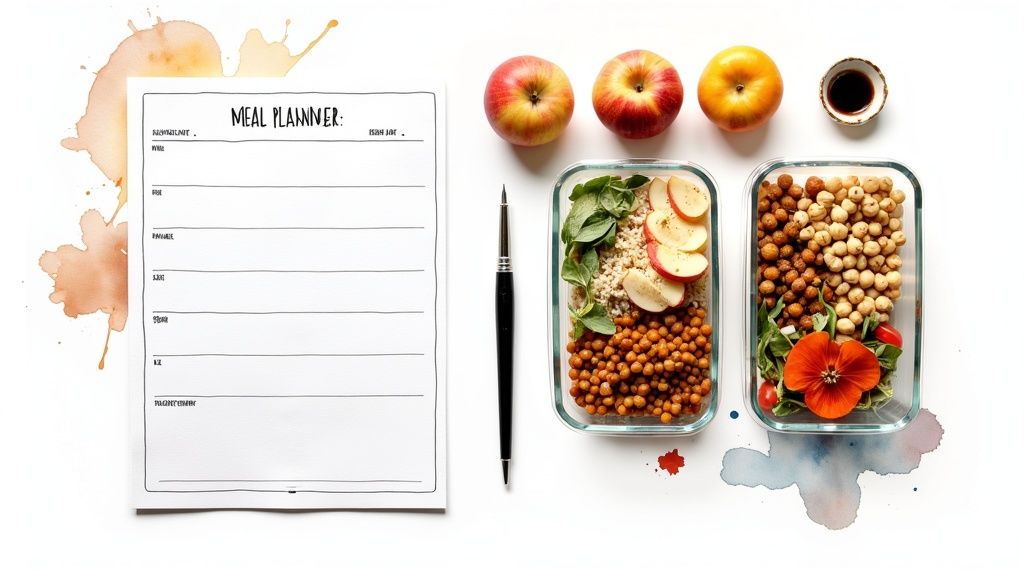
If your budget is the blueprint for your kitchen, then meal planning is the single most powerful tool you have. It's what separates a calm, organised dinner routine from that chaotic 5 PM scramble that all too often ends in an expensive takeaway order.
Honestly, getting a handle on meal planning is the real secret to mastering healthy eating without breaking the bank.
Don't think of it as some rigid, complicated spreadsheet you're forced to follow. A good meal plan is flexible and works for you. The whole point is to cut down on decision fatigue, stop throwing out sad, forgotten veggies, and make sure every dollar you spend on groceries is actually put to good use.
The Magic of Theme Nights
One of the easiest ways I've found to get into the meal planning groove is to introduce theme nights. This simple trick takes the endless "what's for dinner?" debate right off the table. It gives your week a bit of structure without boxing you in.
Instead of staring at a blank planner, you've got a starting point. Your week might look something like this:
- Meat-free Monday: A fantastic way to lean into plant-based proteins like lentils or chickpeas, which are incredibly kind to your wallet.
- Taco Tuesday: Always a hit with the family. It's fun, customisable, and works just as well with seasoned black beans as it does with mince.
- Pasta Wednesday: So versatile and always a winner. A simple tomato-based sauce bulked up with seasonal vegetables is both cheap and nutritious.
- Fakeaway Friday: This is your chance to recreate your favourite takeaway dishes at home for a fraction of the cost. Think homemade pizzas, butter chicken, or a quick stir-fry.
Suddenly, your grocery list almost writes itself. You know you'll need pasta and tinned tomatoes for Wednesday or wraps and beans for Tuesday. It makes the whole process feel less like a chore and more like a simple weekly rhythm.
The "Cook Once, Eat Twice" Philosophy
This strategy is an absolute game-changer for your time and your budget. It’s all about making your cooking efforts do double duty. You're simply preparing a larger quantity of a core meal or ingredient and then repurposing it for a completely different dish the next day.
Let’s say you roast a whole chicken on Sunday. That's a beautiful family dinner right there. But the leftovers can be shredded and totally transformed into new meals for the next day or two.
This philosophy is the ultimate time-saver. By turning tonight's dinner into tomorrow's lunch, you're not just saving money on ingredients—you're also freeing up valuable time during your busy week.
Here’s how that one roast chicken can stretch:
- Meal 1: Sunday Roast Chicken with a tray of seasonal roasted vegetables.
- Meal 2: Shredded chicken and salad wraps for Monday's work or school lunches.
- Meal 3: A creamy chicken and mushroom pasta for Monday's dinner.
- Bonus: Never throw out the carcass! Let it simmer with some veggie scraps to make a nutrient-rich homemade chicken stock for soups and stews.
With this approach, you drastically cut down on food waste and get maximum value from more expensive ingredients like meat.
Your Weekly Meal Plan in Action
So, how does this all come together in a real week? This sample plan shows how a family of four can eat a variety of delicious, healthy meals by focusing on affordable pantry staples like brown rice, lentils, seasonal veggies, and eggs.
Sample Weekly Budget Meal Plan (Family of Four)
| Day | Breakfast | Lunch | Dinner |
|---|---|---|---|
| Monday | Rolled oats with frozen berries | Leftover Lentil Bolognese | Lentil Bolognese with whole wheat pasta |
| Tuesday | Scrambled eggs on wholemeal toast | Tuna and salad sandwiches | Homemade Veggie Burgers on buns |
| Wednesday | Greek yoghurt with banana | Leftover veggie burger patties crumbled into a salad | Chicken and vegetable stir-fry with brown rice |
| Thursday | Wholemeal toast with peanut butter | Leftover chicken stir-fry | Hearty Black Bean Soup with a dollop of yoghurt |
| Friday | Smoothie with frozen fruit and oats | Leftover Black Bean Soup | Homemade Pizza on pita bread with veggie toppings |
| Saturday | Pancakes using pantry staples | Big salad with chickpeas & tinned beetroot | "Clean out the fridge" frittata with leftover veg |
| Sunday | Boiled eggs and toast | Sandwiches with leftover frittata | Sunday Roast Chicken with roasted potatoes & carrots |
Think of this as a template, not a strict rulebook. You can easily adapt it based on what your family likes and whatever’s on special at the supermarket that week.
Planning your meals this way not only helps with healthy eating on a budget but also creates perfect opportunities for batch cooking. If you're looking for more inspiration, check out these great vegan meal prep ideas that are perfect for a busy schedule.
How to Become a Savvy Supermarket Shopper
Let's reframe how you see the weekly shop. Instead of a chore to be rushed through, think of it as a strategic mission. If you walk into an Australian supermarket without a game plan, you're practically asking to be swayed by those flashy end-of-aisle displays and 'special' signs that often aren't as good as they seem.
Becoming a truly savvy shopper is all about learning to see past the slick marketing. It's knowing where the real value hides, and it starts with a few simple, but powerful, shifts in your habits.
Look Beyond the Big Red Ticket
Supermarkets are masterfully designed to get you to spend more. Those bright, urgent-looking sale signs are deliberately placed at eye level, but they don't always signal the best deal. Your secret weapon here is something surprisingly simple: unit pricing.
Take a closer look at almost any price tag in an Aussie supermarket. You'll spot a smaller number, usually per 100g, per kilo, or per litre. That's the unit price, and it's the only way to make a true apples-to-apples comparison. A massive box of cereal might look like better value than two smaller ones, but the unit price will tell you the real story in a heartbeat. Get into the habit of glancing at this number before anything hits your trolley.
Embrace the Humble Store Brand
So many of us walk straight past the store-brand products, automatically assuming they're lower in quality. While that might be the case for certain gourmet items, for most of your pantry basics, the only real difference is the price tag.
Think about the simple stuff where the ingredient list is tiny:
- Tinned Tomatoes: It’s usually just tomatoes and juice. The fancy label doesn't change that.
- Pasta and Rice: The core ingredient is exactly the same.
- Rolled Oats: Again, it’s just oats!
- Tinned Legumes: Chickpeas, lentils, and beans are fantastic store-brand buys.
Just by switching to store brands for these core items, you can easily shave 10-30% off your grocery bill. It's one of the easiest and most effective moves you can make.
Follow the Seasons for Fresh Produce
Buying fruits and veggies that are in season isn't just a trend for foodies; it's one of the oldest money-saving tricks in the book. When produce is in season, it's absolutely everywhere, which means it’s cheaper, fresher, and tastes a whole lot better.
In summer, your trolley should be filled with deals on mangoes, berries, and zucchini. Come winter, you'll find that potatoes, pumpkin, and citrus are at their peak price and quality. A quick search for an "Australian seasonal produce guide" on your phone can be your best friend here.
This isn't just anecdotal, either. Research shows that price sensitivity really shapes our grocery habits. Data reveals that even a small 10% price drop in things like vegetables or legumes can significantly boost how much people buy. You can dig deeper into how price changes influence our food choices and use that insight to stock up whenever healthy staples hit a low price.
Don’t Be Afraid of the Freezer Aisle
The freezer section gets a bit of a bad rap, but honestly, it’s a goldmine for anyone eating healthy on a budget. Frozen produce is an incredible alternative to fresh, especially for anything that's out of season.
Frozen fruits and vegetables are typically snap-frozen right at their peak. This means they often lock in just as many nutrients—sometimes even more—than their fresh counterparts that have travelled for days to reach the store.
Frozen berries, for example, make smoothies possible all year round for a fraction of the cost of fresh punnets. A bag of frozen peas or spinach is a dirt-cheap and ridiculously easy way to add a pop of green to pasta sauces, stir-fries, or stews.
Choose Your Staples Wisely
Finally, being a smart shopper means knowing which pantry staples give you the most nutritional bang for your buck. A perfect example is olive oil, a cornerstone of countless healthy meals. When you're trying to eat well on a budget, finding the best inexpensive olive oil that doesn't skimp on quality is a crucial step. It's a small investment that elevates everything from a simple salad dressing to roasted vegetables, ensuring your budget consistently supports your health goals.
Building Your Budget-Friendly Pantry
A well-stocked pantry is your first line of defence against expensive takeaways and those frantic, last-minute supermarket runs. Think of it as your secret weapon for eating well without blowing your budget; it ensures you always have the building blocks for a quick, cheap, and nutritious meal right at your fingertips.
When your cupboards are thoughtfully organised with versatile staples, you’re far less likely to be tempted by convenience foods that drain your wallet and offer little in return. This isn't about hoarding; it's about curating a smart collection of ingredients that work hard for you.
Start With Versatile Grains
Grains are the unsung heroes of a budget kitchen. They form the filling, fibre-rich base of so many affordable meals, providing slow-release energy that keeps you feeling full for longer. They’re cheap, last for ages, and can be used in countless ways.
Instead of just being a side dish, let them take centre stage on your plate.
- Rolled Oats: Far more than just porridge, oats can be blitzed into flour for healthier pancakes, used to bulk up meatballs, or baked into delicious muesli bars.
- Brown Rice: A fantastic source of fibre, brown rice is the perfect companion to curries, stir-fries, and burrito bowls. Cooking a large batch at the start of the week is a great time-saver.
- Whole Wheat Pasta: Often just as cheap as its refined counterpart, whole wheat pasta offers more nutrients and helps keep you satisfied, preventing those post-meal snacks.
Pack in Plant-Based Proteins
Legumes like beans, lentils, and chickpeas are absolute nutritional powerhouses. They are packed with protein, fibre, and essential minerals, and they cost a fraction of what you’d pay for meat. Honestly, learning to love legumes is one of the fastest ways to slash your grocery bill.
A few tins in the cupboard can be transformed into a hearty meal in minutes. A single can of brown lentils, for example, can be simmered with tinned tomatoes and herbs to create a rich bolognese sauce for your pasta.
A pantry rich in plant-based proteins is a sign of a smart, budget-conscious kitchen. These ingredients are not only incredibly healthy but also offer endless culinary possibilities, from soups and stews to salads and dips.
Diving into different cuisines can also open up new, affordable options. Exploring an Indian market near you is a brilliant way to discover a huge variety of lentils, spices, and flours at excellent prices, adding exciting new flavours to your cooking.
Master Your Flavour Powerhouses
Eating healthy on a budget should never, ever be boring. The real secret to making simple ingredients taste amazing lies in having a solid collection of flavour bases. These items are cheap to buy but deliver a huge impact on your cooking.
This is where being a savvy shopper really pays off.
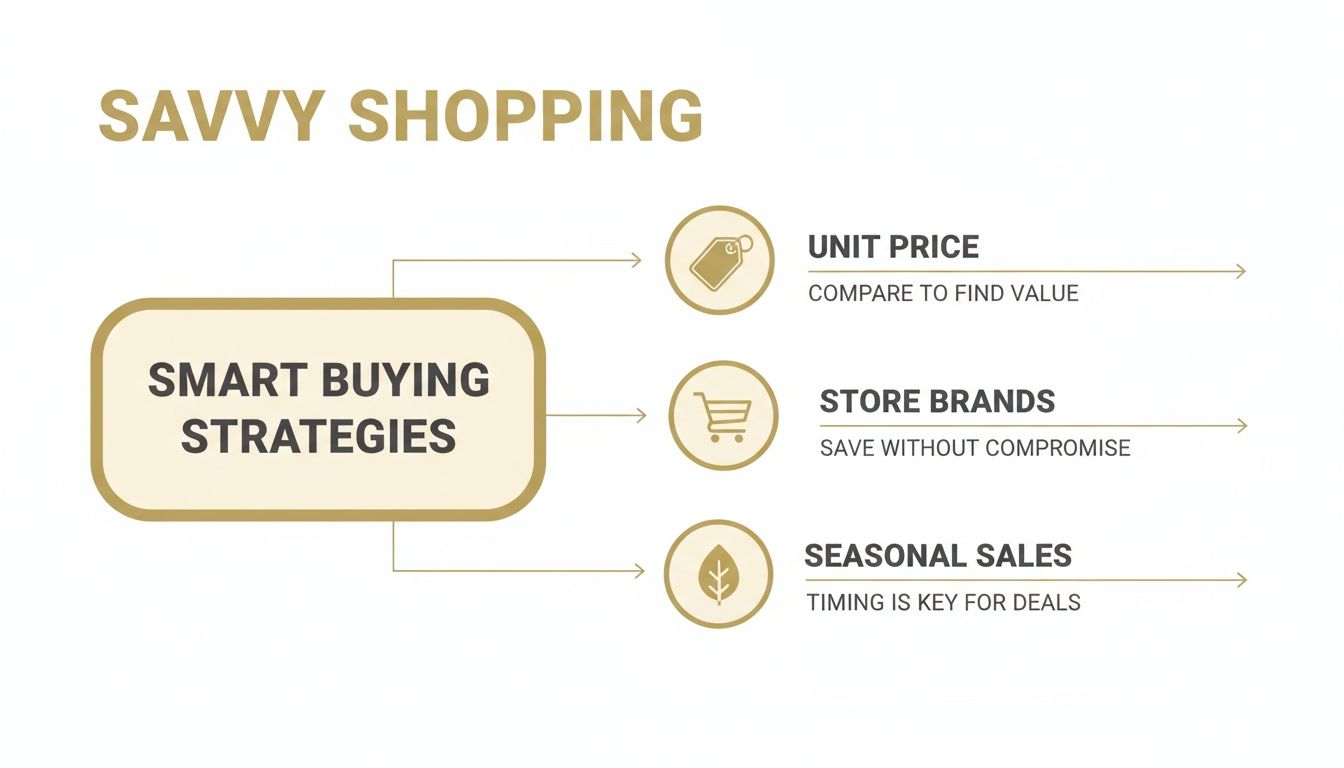
As you can see, focusing on unit pricing, embracing store brands, and buying what's in season will make your grocery money stretch much further.
My non-negotiable flavour essentials include:
- Onions and Garlic: The foundation of countless savoury dishes. They are incredibly cheap and add a depth of flavour that can't be beaten.
- Dried Herbs and Spices: A small collection of basics like oregano, cumin, paprika, and chilli flakes can transform any dish. They are much more cost-effective than fresh herbs, which often wilt in the fridge.
- Stock Cubes or Powder: A quick and easy way to add a savoury boost to soups, stews, and sauces without the expense of liquid stock.
Small changes in what you buy can make a surprisingly big difference to your bottom line. I've found that swapping out just a few regular items for more budget-friendly alternatives can free up a significant amount of cash by the end of the month.
Smart Swaps for Everyday Savings
| Instead of This (Higher Cost) | Try This Instead (Lower Cost) | Why It Works |
|---|---|---|
| Pre-made Pasta Sauce | Tinned Tomatoes + Dried Herbs | You get more sauce for less money, and you can control the salt and sugar content yourself. A win-win. |
| Fresh Berries (Out of Season) | Frozen Berries | Just as nutritious and perfect for smoothies, oats, or baking. Plus, there's zero food waste. |
| Chicken Breast | Chicken Thighs or Drumsticks | These cuts are more flavourful, more forgiving to cook, and significantly cheaper per kilo. |
| Quinoa | Brown Rice or Lentils | While quinoa is great, these staples offer a similar nutritional profile (fibre, protein) for a much lower price. |
| Gourmet Nut Butters | Store-Brand Peanut Butter | Check the label for 100% peanuts. It’s a nutritious, protein-packed spread without the premium price tag. |
These simple swaps aren't about deprivation; they're about being smart with your money so you can enjoy delicious, healthy food without the financial stress.
Don't Forget the Fridge and Freezer
Your pantry isn't just the dry goods cupboard. Keeping a few key items in your fridge and freezer ensures you’re always prepared for whatever the week throws at you.
Frozen vegetables, for instance, are a budget-shopper's best friend. They are just as nutritious as fresh, are available year-round at a consistent price, and you never have to worry about them going off before you get a chance to use them.
Eggs are another budget superstar. They’re a fantastic source of high-quality protein and can be whipped into a quick, satisfying meal any time of day—think omelettes, frittatas, or simply scrambled on toast. By combining these fridge, freezer, and pantry staples, you create a powerful system that supports both your health and your bank balance.
Your Questions Answered: Making Healthy Eating on a Budget Work
Even with the best plan in the world, life happens. Trying to eat well without breaking the bank is a journey, not a destination, and it's totally normal to hit a few roadblocks. Let's dig into some of the most common questions and find some practical answers to keep you moving forward.
The financial side of healthy eating can feel like a huge hurdle, especially when money is tight. And for many Australians, it's a serious concern. Research has shown that a nutritious diet can chew up between 28% and 40% of the disposable income for low-income households—a massive chunk compared to what average-income families spend. These numbers really drive home why smart, budget-friendly strategies are so important. If you want to dive deeper, you can discover more insights about these food affordability challenges and see just how much making every dollar count matters.
Is It Really Cheaper to Cook from Scratch?
Almost always, the answer is a resounding yes! A simple pasta sauce made from tinned tomatoes and dried herbs will beat a pre-made jar on price every single time. The same logic applies when you try recreating your favourite takeaway meals at home.
I get it—the initial cost of stocking your pantry with things like spices, oils, and flours can feel like a big spend. But think of it as an investment. These ingredients last for ages, and when you break it down, the cost per meal for something home-cooked is drastically lower than any store-bought or takeaway option. The best part? You're in complete control of what goes in—no hidden sugars, weird preservatives, or excessive salt.
How Can I Eat Healthy When I Have Absolutely No Time?
This is the big one, isn't it? The secret isn’t magically finding more hours in the day; it's about being smarter with the time you do have. This is where batch cooking becomes your secret weapon.
- Set aside a power hour (or two): Dedicate a bit of time on a Sunday afternoon to prep for the week ahead. Cook up a big batch of brown rice or quinoa, roast a whole tray of seasonal veggies, and maybe make a big pot of lentil soup or bolognese.
- Cook once, eat twice (or three times!): Whenever you’re making a freezable meal like a curry, casserole, or soup, just double the recipe. Freeze the extra in single-serving portions, and you’ve got an instant, healthy meal ready for those chaotic nights.
- Lean on smart shortcuts: There's no shame in using a little help! Frozen vegetables, tinned beans, and quick-cooking grains like couscous are brilliant for throwing together a nutritious meal in less than 20 minutes.
A key thing to remember: eating healthy on a budget doesn't mean you're chained to the stove cooking elaborate meals every night. It’s all about creating a system that makes the healthy choice the easy choice.
What If I'm Dealing with Fussy Eaters?
Ah, the family food critic. Getting everyone on board with a new way of eating can be tricky, but it's far from impossible. The key is to introduce changes slowly and get everyone involved.
Try letting the kids pick a "theme night" for the week from a list you've created. Even better, serve meals that are customisable. Think taco bowls, build-your-own pizzas on wholemeal flatbread, or a big salad bar where everyone can choose their own healthy toppings. This gives them a sense of control and lets them pick the good stuff they actually enjoy. And never, ever underestimate the power of a delicious, healthy sauce or dressing to make a pile of simple veggies suddenly seem exciting.
For those nights when cooking just isn't on the cards, a smart, ready-to-eat meal can be a lifesaver that still fits within your budget. Think of it this way: for less than what you’d spend on a standard takeaway, Jewel of Asia can deliver delicious, preservative-free Indian meals right to your door. With options starting from just $9.99, it's an affordable way to have a wholesome, flavour-packed dinner without the cooking or the cleanup. You can check out the menu and find a new favourite at https://www.jewelofasia.com.au.
Share