



High Protein Vegetarian Meals Made Simple for Australians
Let's debunk an old myth once and for all: the idea that vegetarian meals are somehow lacking in protein is completely outdated. These days, high protein vegetarian meals are not just a possibility; they're a delicious reality, making it easier than ever to fuel a busy, active lifestyle without a single bite of meat.
This isn't just about jumping on a trend. It's a genuine shift towards food that is healthier, more sustainable, and packed with incredible flavour.
Why High Protein Vegetarian Meals Are on the Rise in Australia

More and more Australians are discovering just how satisfying and protein-rich a plant-forward diet can be. This isn't some niche movement anymore; it's a mainstream change driven by people wanting better health, a lighter environmental footprint, and even smarter ways to manage their grocery bills. The old stereotype of bland, boring vegetarian food is finally being replaced by vibrant, robust meals that deliver on both taste and nutrition.
The numbers back this up. Between 2012 and 2018, the number of Aussies eating mostly or entirely vegetarian shot up from 1.7 million to a staggering 2.5 million. This has naturally created a huge demand for convenient, protein-packed options, with sales of plant-based meats alone jumping by 47% between 2020 and 2023.
What Is Driving This Change?
So, what’s behind this dietary evolution happening across the country? A few key factors are making high-protein vegetarian meals more popular than ever.
- Health and Wellness Goals: Many of us are consciously trying to get more fibre and nutrients into our days while cutting back on saturated fats. A well-planned vegetarian diet is a fantastic way to do just that.
- Environmental Awareness: The environmental impact of our food choices is a growing concern for lots of Aussies. Plant-based proteins generally have a much smaller carbon footprint, which is a big win for anyone looking to live more sustainably.
- Budget-Friendly Eating: Let's be practical. Staples of a high-protein vegetarian diet—think lentils, chickpeas, and tofu—are often far more affordable than meat. This makes it a cost-effective way to put nutritious, filling meals on the table.
The best part about this whole shift is that it’s not about restriction. It's about adding a greater variety of wholesome, delicious, and protein-packed foods to your plate. It makes healthy eating feel like an upgrade, not a compromise.
Ultimately, this growing interest means we all have more choices and better resources. Whether it's finding the best vegetarian meal delivery in Australia or discovering incredible new recipes online, it has never been a better time to explore the delicious world of high-protein, plant-forward eating.
How Much Protein Do You Actually Need?
Let's cut through the noise. Figuring out how much protein you need doesn't have to be complicated, and it really comes down to how active you are. The amount that fuels a marathon runner is worlds away from what someone with a desk job needs to feel their best.
A great starting point for most of us is the official government guideline. In Australia, the Recommended Dietary Intake (RDI) is 0.84 grams of protein per kilogram of body weight for men and 0.75 grams per kilogram for women.
So, what does that look like in real life? For a 70kg woman, that’s about 53 grams a day. For an 85kg man, it's roughly 71 grams. This is a solid baseline for general health and keeping your body running smoothly.
But what if you're hitting the gym, trying to build a bit of muscle, or just want to stay fuller for longer? That's when you might want to aim a little higher. Many active people find their sweet spot is somewhere between 1.2 to 1.7 grams of protein per kilogram of body weight. For that same 70kg woman, this bumps her daily goal up to between 84 and 119 grams.
What This Looks Like on Your Plate
It helps to see how these numbers stack up against what people are actually eating. Some interesting research on Australian diets found that, on average, men following a lacto-ovo vegetarian diet get about 80 grams of protein per day. In comparison, their omnivore mates are getting around 108 grams.
This tells us that most vegetarians are easily hitting their basic needs, but there’s definitely room to boost that intake to better support things like muscle repair and feeling satisfied after a meal. You can dive deeper into these vegetarian diet findings if you're curious.
The real secret isn't obsessing over hitting an exact number every single day. It’s about consistently building your high protein vegetarian meals around quality protein sources. Aim for about 25-35 grams of protein per meal, and you'll hit your daily goal without even trying.
This simple shift in focus makes even higher targets feel totally achievable. Of course, supplements like various protein powder options can be a convenient way to top up your intake, but getting your protein from whole foods should always be the priority.
Ultimately, knowing your personal protein window—whether it’s closer to the baseline RDI or the higher end for an active lifestyle—is about empowerment. It allows you to build meals that genuinely work for your body and your goals, leaving you feeling energised, strong, and properly satisfied.
Stocking Your High-Protein Vegetarian Pantry
The secret to consistently eating well, especially on a high-protein vegetarian diet, isn't about complex recipes or spending hours in the kitchen. It’s all in the pantry. Honestly, a well-stocked kitchen is your best defence against the last-minute takeaway decision on a busy weeknight.
When you have the right building blocks on hand, you’re not just filling shelves; you're creating a system for success. It means a nourishing, protein-packed meal is always just minutes away, turning what feels like a chore into a simple, creative process.
This visual guide gives a great overview of daily protein needs and how they compare.
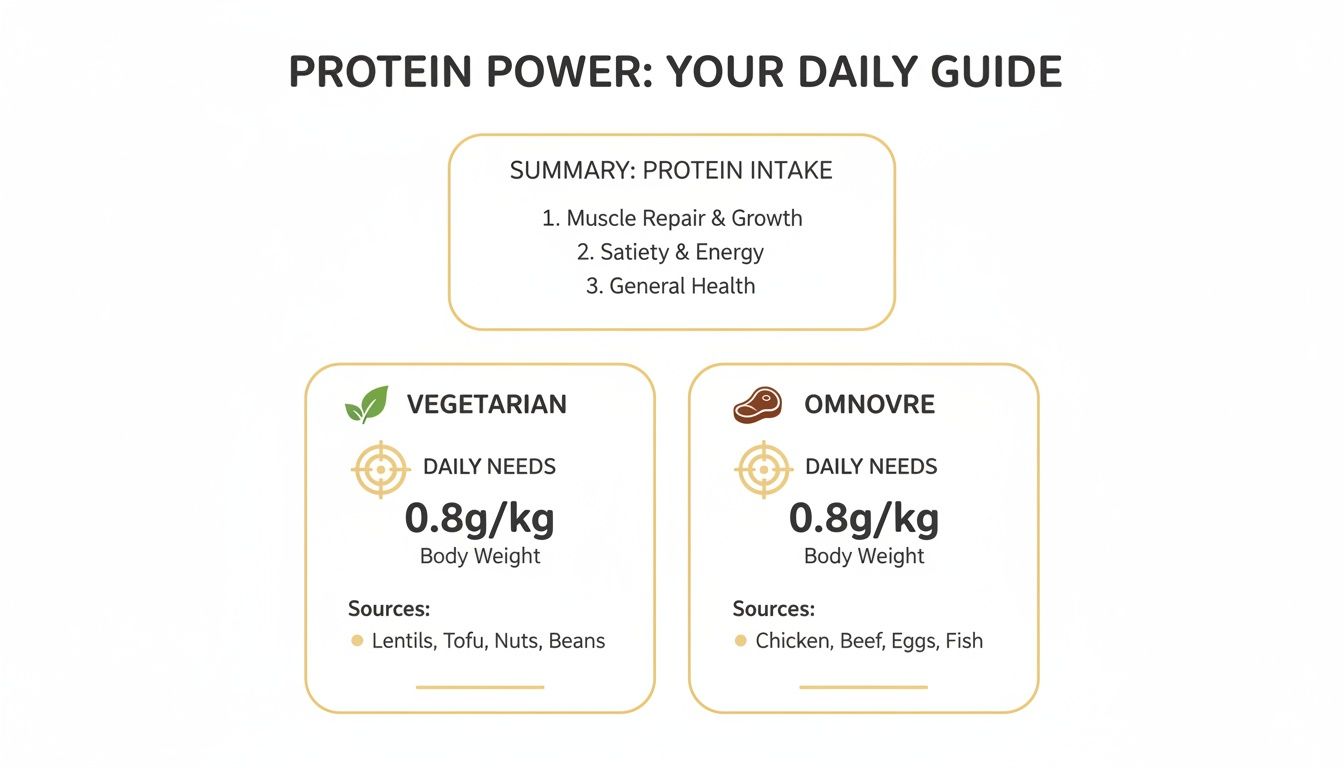
As you can see, hitting your protein targets as a vegetarian is entirely achievable with a bit of know-how.
Your Core Protein Powerhouses
Let’s start with the non-negotiables. These are the workhorses of your high-protein meals—they're affordable, last for ages, and are incredibly versatile.
- Legumes: Canned or dried lentils (I always keep red and green), chickpeas, and black beans are absolute must-haves. A single cup of cooked lentils gives you a huge 18 grams of protein, making them a natural fit for curries, soups, and substantial salads.
- Soy Products: Tofu and tempeh are true champions in the plant-based world. A 100g block of firm tofu has about 17 grams of protein, while its fermented cousin, tempeh, comes in even higher at around 19 grams. I also keep a bag of edamame in the freezer for a super-fast snack or salad addition.
- Nuts and Seeds: This is where you can easily add a boost of protein, healthy fats, and satisfying crunch. Almonds, walnuts, chia seeds, and pumpkin seeds are great, but my personal favourite is hemp seeds. Just a sprinkle over your porridge or yoghurt can add an extra 10 grams of protein.
Building a great pantry isn't about buying one of everything. It's about finding the 5-10 core ingredients you genuinely enjoy and learning how to use them in different ways. This makes meal planning intuitive and enjoyable.
Top Plant-Based Protein Sources for Your Pantry
To make things even easier, here’s a quick-reference table of my go-to protein sources. Keep these in mind on your next grocery run.
| Protein Source | Protein per 100g (Cooked) | Best Used In |
|---|---|---|
| Lentils | 9g | Curries, soups, stews, veggie burgers |
| Chickpeas | 8g | Salads, hummus, roasted snacks, curries |
| Firm Tofu | 17g | Stir-fries, scrambles, baked "steaks" |
| Tempeh | 19g | Marinated strips, crumbled "mince" |
| Edamame | 11g | Steamed snack, salads, grain bowls |
| Quinoa | 4g | Grain bowls, salads, side dishes |
| Hemp Seeds | 31g (raw) | Smoothies, sprinkled on porridge/yoghurt |
| Pumpkin Seeds | 30g (raw) | Toasted for salads, trail mix |
Having a mix of these on hand means you’re always ready to build a balanced, satisfying meal from scratch.
Grains and Complex Carbs
Whole grains do more than just provide long-lasting energy; they also bring a surprising amount of protein to the table.
Quinoa is the star here, delivering 8 grams of complete protein in every cooked cup. But don’t overlook others like brown rice, freekeh, and wholewheat pasta. These complex carbs are key to feeling full and energised long after you've finished eating.
Healthy Fats and Flavour Boosters
This is where the magic happens. The right fats and seasonings are what will transform a basic bowl of ingredients into something you actually look forward to eating.
Make sure your pantry has good-quality olive oil, avocado oil, and a jar of tahini for dressings and cooking. For flavour, you can't go wrong with soy sauce (or tamari for a gluten-free option), nutritional yeast (for that cheesy, savoury hit), and a solid collection of spices like smoked paprika, cumin, and coriander. A quality vegetable stock is a must, too. These items last forever and can completely change the vibe of a dish, keeping your meals interesting.
If you're keen to explore beyond the usual, looking into a guide on the best vegetarian protein sources in Indian cuisine can give you brilliant inspiration for both your pantry and your plate.
A Simple Formula for Balanced Vegetarian Meals
Okay, so your pantry is stocked with high-protein goodies. But how do you actually turn them into satisfying meals day after day? It's easy to get bogged down worrying if a meal is 'balanced' enough, but it really doesn't need to be a guessing game.
The best strategy I've found is a visual one. I call it the Protein Plate method, and it takes the mental load out of meal planning.
This isn't about militant calorie counting or obsessing over grams. Think of it more as a flexible blueprint for building high protein vegetarian meals that keep you full and energised, whether you're throwing together a quick lunch or sitting down for dinner.
Imagine your plate is a canvas, and you're about to create a masterpiece of flavour and nutrition.
The Protein Plate Blueprint
The whole idea is super simple: you visually divide your plate into three sections. This little trick ensures you're getting the right mix of protein, veggies, and carbs without having to think too hard about it.
-
Half Your Plate (50%) Non-Starchy Vegetables: This is where you load up on colour, vitamins, and gut-friendly fibre. We're talking leafy greens, broccoli, capsicum, zucchini, mushrooms, and tomatoes. Don't be shy—the more variety, the better.
-
One Quarter (25%) High-Protein Foods: This is the star of the show. Fill this space with a solid protein source like a few slices of baked tofu, a hearty scoop of lentil curry, a pile of chickpeas, or a couple of black bean patties.
-
One Quarter (25%) Complex Carbs and Healthy Fats: This last section is all about slow-release energy. Think quinoa, brown rice, roasted sweet potato, or wholewheat pasta. You can also add your healthy fats in here, like half an avocado or a drizzle of tahini dressing.
This 50-25-25 split is your mental shortcut to a balanced meal. When you glance down at your plate and see this ratio, you know you've built something that will properly fuel you for hours.
Bringing the Protein Plate to Life
Let's look at how this plays out with a couple of real-world meals you could easily whip up. It's less about following a rigid recipe and more about assembling components.
Example 1: A Black Bean Burrito Bowl
Picture a bowl. Start by filling half of it with a base of crisp shredded lettuce, diced tomatoes, and some sautéed capsicum and onions. Next, add a generous scoop of seasoned black beans to one of the empty quarters. Fill that final quarter with fluffy brown rice and top it all off with some creamy avocado. See? It just naturally fits the formula.
Example 2: A Quick Lentil and Feta Salad
For a speedy work lunch, grab your container and fill half of it with rocket and chopped cucumber. Add a scoop of pre-cooked brown lentils to one quarter. In the final quarter, crumble in some feta cheese and a few olives. A quick drizzle of lemon vinaigrette, and you’ve got a protein-packed meal that took minutes to assemble.
This simple, repeatable strategy takes the guesswork out of eating well. Once you get the hang of it, you’ll be building your own delicious, high-protein dishes without a second thought.
Your Smart Vegetarian Meal Prep Strategy for the Week
Let’s be honest, the words “meal prep” can conjure up some pretty bleak images. We’ve all seen them: rows of identical plastic containers, each filled with the same sad salad doomed for a week of monotonous lunches. It’s no wonder so many people give up.
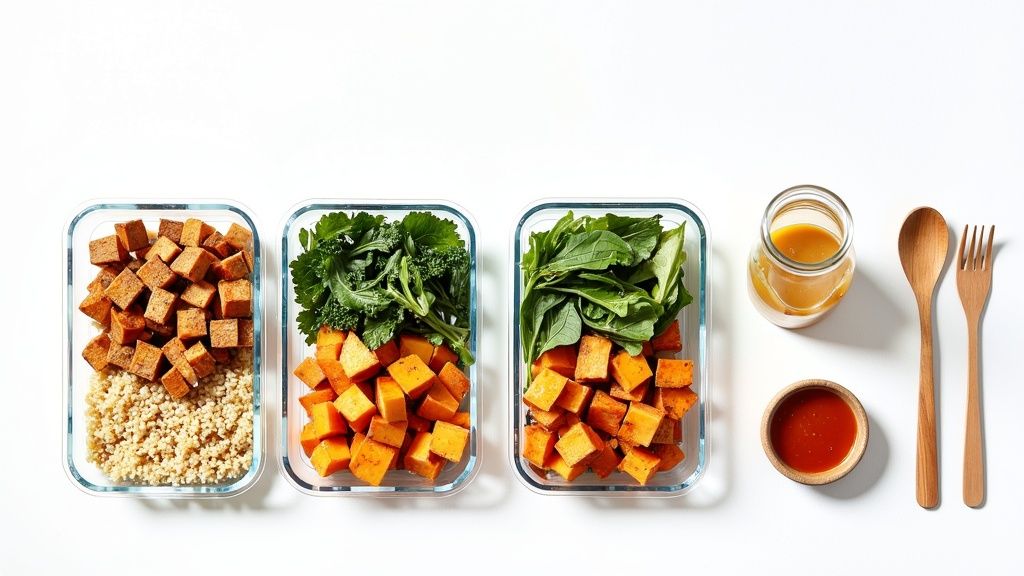
But what if we flipped the script? Instead of prepping full, finished meals, what if you just prepped the components? This is the secret behind the 'Mix and Match' method. It’s a game-changer that turns a couple of hours on a Sunday into a week of creative, delicious, and genuinely different high-protein vegetarian meals.
Build Your Weekly Toolkit
The aim here isn't to lock yourself into five identical lunches. The goal is to build a flexible toolkit of ingredients you can pull from throughout the week. You're creating building blocks, not finished meals.
This approach is brilliant because it saves a mountain of time on busy weeknights, helps you use up what you have, and completely eliminates the flavour fatigue.
A typical Sunday prep session might look like this:
- Protein Power-Up: Bake a block of marinated tofu until it’s perfectly golden and maybe simmer a pot of lentils. Done. Your protein anchors are ready to go.
- Complex Carbs: Get a big batch of quinoa or brown rice cooked and cooled. This is the satisfying base for so many meals.
- Roast a Rainbow of Veggies: Toss a tray of chopped sweet potato, broccoli, and capsicum in some olive oil and roast until tender. Roasting brings out their natural sweetness and incredible flavour.
- Fresh & Crunchy: Chop up some cucumber, cherry tomatoes, and red onion. Store them in an airtight container for adding that fresh crunch to salads and wraps.
- DIY Dressing: In a jar, shake up a simple lemon-tahini dressing or a classic vinaigrette. It takes two minutes and will taste infinitely better than anything from a bottle.
By doing this, you're essentially turning your fridge into a personal deli counter or salad bar. Everything is organised, visible, and ready to be assembled at a moment's notice.
Assembling Your High-Protein Vegetarian Meals
Here's where the magic happens. With all your components prepped, throwing together a fantastic meal takes mere minutes. You're never stuck eating the same thing twice.
Let's see how one batch of prepped food can transform into different meals all week.
Monday’s Power Bowl
Start with a scoop of that fluffy quinoa. Add a handful of your roasted sweet potatoes and broccoli, then top it with a generous serve of the baked tofu. Finish with some fresh cucumber and a good drizzle of that lemon-tahini dressing. A perfectly balanced, high-protein meal ready in five minutes flat.
Tuesday’s Loaded Wraps
Grab a wholemeal wrap and slather it with some hummus. Layer on a handful of spinach, your pre-cooked lentils, chopped tomato and onion, and maybe a crumble of feta. Roll it up, and you’ve got a portable, seriously satisfying lunch.
Wednesday’s Quick Stir-fry
Heat a dash of soy sauce and sesame oil in a wok or pan. Throw in the last of your roasted veggies and tofu, tossing them until they’re warmed through. Serve it all over a bed of quinoa for a speedy, flavour-packed dinner that tastes like you made it from scratch.
This mix-and-match system really is the key to making healthy eating stick when life gets busy. For more inspiration on what to prep next, check out these clever vegan meal prep ideas that are easy to add to your rotation.
Still Have Questions? Let's Clear a Few Things Up
It’s completely normal to have a few questions when you’re changing up your eating habits, even with the best plan in place. Shifting to a higher-protein vegetarian diet is a great move, but it can bring up some common sticking points. Let's tackle them head-on so you can feel confident in your choices.
"Do I Really Need to Use Protein Powder?"
Honestly? Probably not. For most of us, a well-thought-out diet packed with whole foods like tofu, lentils, Greek yoghurt, and quinoa will easily get you to your protein goal. Protein powders are just a convenient supplement; they aren't a requirement for creating delicious high protein vegetarian meals.
I like to think of them as a helpful tool in the toolbox, not the whole toolbox itself. They can be a real lifesaver if you're an athlete with serious protein demands or if your schedule is so packed that sitting down for a proper meal is a struggle. But the main goal should always be to get your nutrients from real food first.
Think of protein powder as an optional booster for those extra-demanding days, not a mandatory part of a successful high-protein diet.
"But What About Getting All the Essential Amino Acids?"
This is a classic vegetarian worry, but the old myth that you need to perfectly pair "incomplete" proteins at every single meal has been thoroughly debunked. Our bodies are smarter than that. They maintain a pool of amino acids from all the different foods we eat over a 24-hour period.
So, as long as you're eating a good mix of protein sources throughout the day—think legumes, grains, nuts, and seeds—you’ll get all the essential amino acids you need. That peanut butter on toast you had for breakfast and the lentil curry planned for dinner? Together, they've got you covered. Variety is the key, not complicated meal-by-meal calculations.
"What Are Some Easy, High-Protein Snacks I Can Grab?"
This is where you can really make a difference in hitting your daily protein targets. Smart snacking is your secret weapon. Having quick, protein-rich options ready to go means you won't be tempted by sugary, empty-calorie snacks when hunger suddenly strikes.
Here are a few of my go-to options for a quick protein hit:
- A small pot of Greek yoghurt
- A handful of almonds or walnuts
- Roasted chickpeas (crunchy, savoury, and so easy to make)
- Steamed edamame pods with a pinch of sea salt
- A hard-boiled egg or two
Keeping these stocked in your fridge or pantry makes staying on track feel almost effortless.
For those days when you're just too short on time to cook, Jewel of Asia offers a delicious solution. Check out our chef-prepared menu of ready-to-eat Indian meals, delivered straight to you. You can find this week’s high-protein vegetarian options at https://www.jewelofasia.com.au.
Share